Copec unveils first of 22 new charging terminals for public transport in Chile
Published on: Aug 18, 2025
New terminal in Santiago will cut 8,600 tons of CO₂ annually and power 88 electric buses with 100% renewable energy.
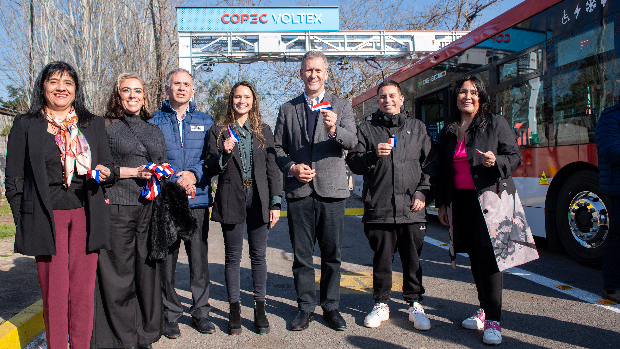

Copec has inaugurated the Gabriela charging terminal in Puente Alto, the first of 22 new electric bus terminals the company will begin operating this year across Chile’s Metropolitan Region. The facility is part of a wider effort to expand the benefits of e-mobility to more communities in Santiago through its subsidiary Copec Voltex.
Of the 22 terminals projected, 20 will be newly built by Copec, while two existing ones will now be operated by the company. This expansion consolidates its role as a key player in charging infrastructure for Chile’s growing fleet of electric public transport.
Transport Minister Juan Carlos Muñoz said: “E-mobility not only improves travel conditions for passengers, but also enhances the quality of life for riders, drivers, and communities overall. That is why we celebrate the inauguration of this state-of-the-art infrastructure, which already hosts part of the 1,400 electric buses we are adding to Red Movilidad. By early 2026, more than 60% of the fleet will be fully electric.”
The Gabriela Electroterminal features 21 overhead split chargers that maximize space efficiency, improve safety, and streamline bus operations. The site can energize 88 electric buses and provide daily benefits to thousands of passengers.
Andrea Castro, General Manager of Copec Voltex, added: “This milestone reflects the commitment that has guided us for 90 years: to stand alongside Chile in all its challenges. Today, we do so by driving e-mobility nationwide through high-standard infrastructure. With the terminals projected in Santiago, in the regions, and those already operating across the country, we continue consolidating a robust network that accelerates the transformation of public transport.”
The terminal is operated by Inversiones Gran Américas Santiago, a new player in the RED system that will manage over 390 electric buses. Its 100% renewable operation will prevent 8,600 tons of CO₂ emissions annually, the equivalent of planting more than 430,000 trees, while reducing noise and air pollution for surrounding communities, including the nearby Senda del Saber school.