Optimizing your C-Store profitability with the right concept to tackle shrink
Published on: Oct 21, 2025
Advertorial
C-Stores are vibrant and innovative environments that attract consumers every day but a large variety of services and the challenging labor market make it increasingly complicated for retailers to operate them efficiently. Smooth in-store processes and reliable and flexible checkout concepts that minimize shrink are key to success.
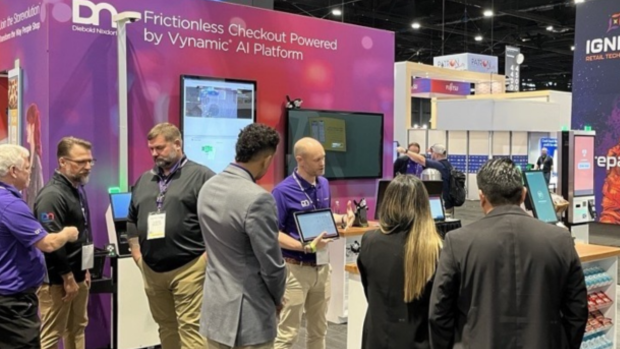
The 2025 NACS Show in Chicago showcased the future of fuel and convenience retail – and it is more exciting than ever. It is great to see how C-Stores are evolving beyond being a place for quick snacks and coffee stops and how retailers are already embracing self-service technology to give shoppers more choice when shaping their individual consumer journeys. But, there are still several challenges and one of the most pressing ones in today’s retail environments also impacts the profitability of C-Stores: shrink. This piece dives into this hidden challenge, outlines the different causes of shrink, provides a smart solution based on Smart Vision technology as well as some guidance for retailers as the right deployment strategy is key for success.
Shrink is more than just theft
There are four different reasons for shrink we observe in retail environments and despite several ongoing discussions in the industry, shoplifting is only a smaller part of the truth. It all starts with unmalicious scanning errors at the checkout, including both the shoppers and the store attendants, often amplified by the busyness of the C-Store environment. Several projects with retailers worldwide have shown that those unintentional non-scans can – if not detected – be the main reason for revenue losses. Another reason is called “frustration shrink”. It also covers shoppers who do not intend to steal anything but who get frustrated when experiencing friction during the checkout process, for example when they have to choose the right type of fresh produce, baked goods or other non-barcoded items that might be hidden in complex menus. In a hurry or simply by being frustrated they select another, perhaps cheaper item instead of the real one. On the other side, there are situations where opportunistic shoppers can decide to trick a self-service checkout system when feeling not observed by the store attendants or video surveillance. These are shoppers who have not entered the C-Store with plans like this but decided to exploit the situation. And, of course, there are shoppers who enter the C-Store and maliciously try to steal, no matter if in the aisles or at the checkout.
AI-powered shrink reduction tailor-made for C-Stores
Smart vision technology can help shoppers to reduce scanning errors and retailers not to alienate those who don’t intend to steal anything. Additionally, it can minimize the number of employee interactions – a win-win-situation. There’s already a lot of buzz in the market discussing AI-powered solutions that especially help grocery retailers to tackle shrink at the self-service checkout and beyond. It uses technology to analyze customers’ behavior and activities in real-time, detecting if an item passes through without being scanned and being paid for, items stacked on top of each other or if a customer leaves the checkout without paying, just to name a few examples. In the event of an error, the shopper is alerted via an on-screen message, and store attendants also receive an alert on their mobile terminal. Should an employee intervention be necessary, short video sequences of the process recognized by the system as an anomaly help them to better assess what situation awaits them at the self-checkout.
Sounds like a plan for C-Stores. But is this approach easily applicable here, as checkout zones in grocery stores are mostly separated and very structured, providing enough space to clearly capture the transaction, whereas C-Stores are often designed as free flow environments with limited space at the checkout?
The good answer is: Yes, with only a few specifications F+C retailers should consider. C-Stores require a solutions concept combining powerful Smart Vision technology capabilities for unstructured environments with a small footprint. For example, a small and flexible checkout solution like the DN Series® EASY ONE can be a good start to create a tailor-made AI-powered shrink reduction solution for C-Stores. This revolutionary checkout platform can be placed in a small checkout area or even on the counter with limited space and can be configured for assisted, semi-assisted or full self-service checkout. In addition to this, a AI solutions with the Smart Vision camera on top of the installation can be specifically trained for the small transaction space at C-Store checkouts, enabling the system to capture all items in the hands or in the basket of the shopper and assign them to his specific transaction, even if there are other shoppers standing closely next to him.
Innovative technology is good – when working
What F+C retailers should keep in mind when thinking about how to boost shopping experiences and the profitability of their C-Stores: The technology can only contribute to these goals when it fits a well-defined concept. A thorough analysis with a view to factors such as consumer structure, their shopping and payment habits, peak times during daytime and weeks and other operational processes, size and profile of the store as well as the environment can be a good start. The definition of the appropriate checkout concept and the future in-store operations then dictate the technology needed. The right choice, the interplay between traditional checkouts, self-service solutions and AI technology as well as the right training and deployment of staff members will ultimately determine how well the concept performs and how well the overall offering is accepted by consumers.
Additionally, in an environment with a small number of checkout systems it is crucial to have the highest possible availability to not disappoint shoppers and miss any revenue opportunity. This means that an effective Managed Services concept should be defined from the beginning, ideally including proactive and predictive services working behind the scenes to detect possible IT incidents and solve them before they happen, with no operational disruption for your C-Store equipment.
If you’d like to learn more, visit Diebold Nixdorf



By By Nino Hörttrich, Head of Global Marketing Retail at Diebold Nixdorf