Q&A: OLACDE and the energy transition in Latin America
Published on: Apr 10, 2026
In a context shaped by new energies and global volatility, Latin America is charting its own path based on complementarity and long‑term planning. Alongside Fitzgerald Cantero, Director of Studies, Projects and Information at the Latin American Energy Organization (OLACDE), we explore the opportunities, limitations, and lessons facing the region amid growing energy‑related tensions.
Over the past decade, regions such as Europe, North America, and Asia have moved decisively toward alternative mobility solutions, setting the pace for the global energy transition. Latin America, historically slower in some of these processes, is nonetheless beginning to consolidate an increasingly promising scenario of its own. This is reflected in the Energy Outlook for Latin America and the Caribbean 2025 report by OLACDE, which highlights rapid growth in renewable energy, unprecedented expansion of e-mobility, and the strategic role of natural gas as a backup energy source. Against this backdrop, several key questions emerge: What path is Latin America taking? Which energy sources are truly leading the transition? What lessons can be drawn from other regions? And how can this potential be transformed into sustainable development?

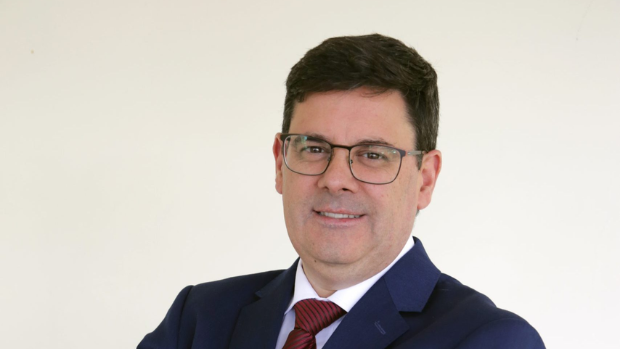
MobilityPlaza: What is OLACDE’s role as an international organization, and what is your role within it?
Fitzgerald Cantero: OLACDE is an intergovernmental organization made up of 27 member countries from Latin America and the Caribbean. We work closely with ministries of energy, or equivalent bodies within the executive branch, supporting countries in defining and planning their energy policies. Our approach is comprehensive: we cover the entire energy agenda, all technologies, and all decision‑making processes related to the sector.
In this context, countries face complex challenges that intersect energy with economic, trade, environmental, territorial, and urban‑planning dimensions. From OLACDE, we seek to support governments by providing concrete tools for decision‑making. This includes producing reports, studies, technical documents, and spaces for experience sharing that allow countries to evaluate options and define strategies aligned with their specific realities and needs at any given time.
MP: Latin America is often said to have strong potential for the development of alternative fuels. What factors help explain this perception?
FC: Latin America starts with a very clear advantage: the abundance and diversity of natural resources, which gives the region exceptional energy potential. If you look at the key inputs required for the global energy transition, minerals such as lithium, copper, or nickel; the region not only has them, but in many cases holds some of the world’s largest reserves.
This is complemented by a strong renewable base. Today, Latin America is the region that generates the largest share of its electricity from renewable sources, creating favorable conditions for developing lower‑carbon energy solutions. The same applies to biofuels, where agricultural capacity and biomass management allow production to scale sustainably.
In addition, the region has established leadership and proven knowhow. Brazil, for example, is one of the world’s leading producers of bioethanol and biodiesel, the result of decades of public policy, technological adoption, and industrial development. That accumulated expertise is a major advantage.
Finally, regional potential is also driven by growing global demand. Sectors such as maritime transport and aviation are setting concrete decarbonization targets, opening opportunities for Latin America to become a relevant supplier of alternative fuels. At the same time, cleaner mobility solutions are emerging at multiple scales, from large logistics chains to local initiatives, demonstrating the region’s ability to provide diverse responses.

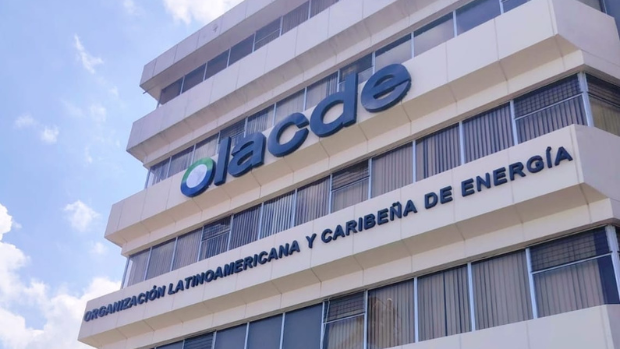
MP: How can Latin America leverage its energy diversity and complementarity to accelerate the transition? What role does OLACDE play in this?
FC: Leveraging that diversity requires advancing integration and complementarity: developing regional industrial chains, strengthening productive capacity, training local talent, and creating conditions for investment to remain within the region. Countries with different energy profiles can complement each other, as is already happening in other parts of the world. The potential exists, but it requires greater coordination and integration to convert resources into sustainable industrial development.
OLACDE does not promote a specific technology. We support the sovereign decisions of countries and work with energy ministries when they request assistance to design roadmaps, evaluate alternatives, or plan public policies. Our role begins with clear diagnostics: identifying technical, regulatory, or financial barriers and proposing possible paths to overcome them. We also aim to foster a virtuous cycle of regional cooperation by facilitating technical studies, promoting the exchange of experiences among countries, and helping establish shared goals.
MP: The Energy Outlook 2025 report shows 851% growth in the electric vehicle fleet between 2022 and 2025. What explains such rapid growth?
FC: This growth is the result of several factors aligning over recent years. On one hand, steadily declining EV prices combined with improved driving range have made electric vehicles increasingly competitive from a cost perspective. This has been reinforced by government incentives across the region, both for vehicle purchases and charging infrastructure deployment. There is a key dynamic here: supply, demand, and infrastructure are advancing together.
Beyond growth itself, there is also a very concrete economic factor driving e-mobility adoption. OLACDE recently conducted an analysis comparing average gasoline and diesel prices with average electricity prices across the region. The results show that, based solely on energy costs and without considering additional incentives, the current fleet of light‑duty EVs and electric buses already generates annual savings approaching $1 billion, with savings increasing as oil prices rise.
On an individual level, a light‑duty EV can save around $2,000 per year, while an electric bus can save approximately $26,000 annually, figures that grow if oil prices increase. This economic equation accelerates investment payback and reinforces the appeal of e-mobility, while also presenting new challenges in terms of infrastructure, training, and planning, particularly in a region where more than 700,000 electrified vehicles (both fully electric and plug‑in hybrids) are already on the road.
MP: Looking at global trends, what lessons can be learned from other regions, and what opportunities does this create for Latin America?
FC: From a geopolitical perspective, there are clear lessons. Europe made a strong decision by setting deadlines to phase out internal combustion vehicles, but it did not always prepare its industry to keep pace with that change. Meanwhile, China, now the world’s largest producer of batteries and EVs, was ready to supply that demand. As a result, Europe began to see closures of traditional manufacturing plants, particularly in countries like Germany, where the automotive industry is a key economic pillar. A similar situation occurred with nuclear energy, where projects were halted years ago and are now being reconsidered.
In the United States, there have also been clear signals, from tariffs on Chinese vehicles to policy shifts between different administrations. Latin America, however, faces a different opportunity. EV manufacturing plants are being established in countries such as Mexico and Brazil, battery production is emerging in Chile, and smaller initiatives already exist in Argentina, Uruguay, and Bolivia.
We have clean energy, raw materials, productive capacity, and a growing market. If we can integrate these elements into regional value chains, the energy transition can become an opportunity for industrial development, not just a technological shift.
MP: Hydrogen faces challenges in mobility globally, although its potential remains. How does OLACDE view its role in Latin America today?
FC: Today, hydrogen is far more focused on industrial uses and its derivatives, such as in the chemical or fertilizer industries. In mobility, its most evident applications are beginning to emerge in heavy transport, such as freight trucks or long‑distance buses, and as an input for synthetic fuels linked to maritime and aviation sectors.
There are pilot projects, for example, in heavy freight transport in Uruguay, but these remain isolated cases facing major challenges related to costs, refueling, and infrastructure. For light‑duty vehicles or urban public transport, hydrogen still appears to be a more distant option, not only for technical reasons but also economic ones. Hydrogen competes with itself across different variants (gray, blue, green) and with natural gas, which is currently more price‑competitive. In this sense, hydrogen is a valid alternative, but mainly for specific niches.
MP: In contrast, how would you describe the current state and role of natural gas in mobility across Latin America?
FC: Natural gas is undoubtedly one of the key transition fuels in Latin America and will remain so for decades. Countries tend to rely on the resources they have, and the region has significant gas reserves. This explains its strong presence in urban and passenger transport, such as taxis and buses, which is clearly visible in cities like Lima, where gas is fully integrated into everyday mobility.
From both an economic and environmental perspective, natural gas offers advantages over other fossil fuels, with lower emissions and high availability. From a multi‑energy perspective, natural gas still has considerable room for growth, especially if regional integration is further strengthened.
MP: How do you see Latin America positioned amid recent global energy and geopolitical challenges?
FC: Latin America has a major opportunity in an increasingly tense and uncertain world. Uncertainty has always existed, but today it changes at an unprecedented speed, and in that global context, the region is well positioned. We have natural resources, energy potential, productive capacity, and people, although we must continue investing in education and training.
There is growing global demand for energy, critical minerals, rare earths, and new inputs linked to the energy transition. Topics that were once confined to technical discussions have entered the public conversation, and many of them are concentrated in Latin America. The challenge is to transform that demand into added value, productive development, and growth for our people.
Historically, we have been exporters of raw materials and importers of manufactured goods. Today, we have the opportunity to think differently, to plan 20, 30, or 40 years ahead, generate synergies among neighboring countries, and complement each other more effectively. Unlike other regions, Latin America is not affected by internal or cross‑border armed conflicts, which is also an advantage. If we can integrate, coordinate policies, and seize this moment, we can consolidate a sustainable development path that benefits the entire region.
Written by Gonzalo Solanot

By Gonzalo Solanot