Q&A with Prince Awuley (ZEN Petroleum): “There’s opportunities for consolidation in Ghana”
Published on: Jan 13, 2026
ZEN Petroleum has carved out a strong position in Ghana’s competitive downstream fuel market, ranking among the top five players despite a relatively small retail footprint. In this Q&A, Retail Director Prince Awuley shares insights on growth strategy, market trends, and the future of mobility.
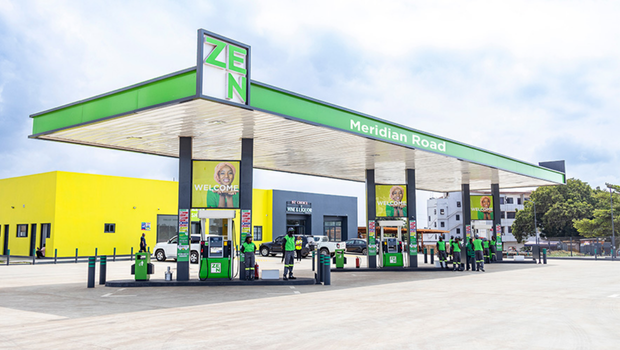

Despite operating only about 60 retail outlets within Ghana’s nearly 5,000-station downstream fuel retail market (as of the end of 2024) outlets, ZEN Petroleum has established itself as one of the country’s most influential fuel retailers. The company holds roughly 6% market share, ranking fourth behind Star, GOIL, Vivo (Shell Licencee) with Total Energies in fifth position as of Q3 2025. Together, the top five players account for roughly 40% of the market, a strong position considering Ghana has 141 licensed oil marketing companies. Prince Awuley, who joined ZEN in June 2012, leads the entire retail operations portfolio, bringing more than a decade of downstream oil industry expertise.
MobilityPlaza. How would you describe your position in the Ghanian market?
Awuley. Our average throughput per site is the highest in the market. This demonstrates our disciplined focus on strategic, high-value locations that deliver benefits to customers and partners alike. By the end of Q4 2025, we expect to fully consolidate our rank as the fourth-largest in OMC by market share, improving on our 2024 performance when we closed the year in fifth place.
MP. How much of a challenge is it to increase the number of sites in the market? Do you expect to see more consolidation happening?
A. We expect consolidation. Ghana currently licenses over 140 OMCs in for a population of about 35 million people, which strains the regulator’s ability to maintain consistent standards across the sector. A smaller, stronger competitive field benefits both the industry and the regulator.
Deregulation in 2005 was intended to build local participation and reduce multinational dominance. While that goal was achieved, the current landscape creates opportunities for strategic consolidation.
We are targeting high‑volume locations that can deliver up to double the average of competitor throughput. As competition intensifies, lower-tier players will become acquisition or partnership prospects, enabling efficient expansion.
MP. What model do you have for the convenience segment?
A. Most ZEN stations operate the Company-Owned Company-Operated (COCO) model with some Dealer Owned Company Operated (DOCO) sites. Our convenience stores are leased to third parties so we have not yet optimized this segment. As our footprint in the capital, Accra, expands and reaches critical mass, we will shift focus to enhancing the convenience store and food service offering.

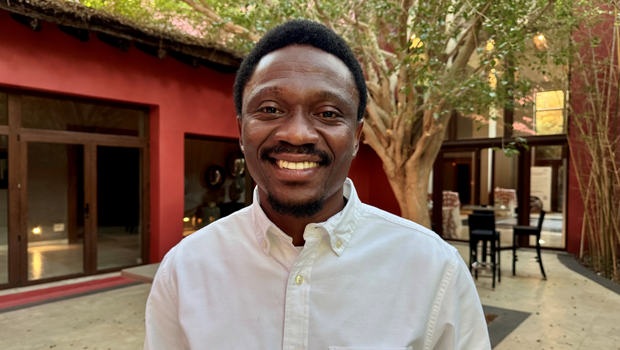
MP. Is there a demand from customers in Ghana for better convenience and food offerings?
A. Yes. Urban migration is swelling the number of city dwellers who have less time to cook, which is driving demand for ready-made and quick-serve food options. While informal kiosks can pop up anywhere and often sell items at lower, unregulated prices, they lack consistent quality and pricing stability. By scaling a formal convenience-store model at our stations, we can offer competitive prices, reliable product quality, and a more convenient shopping experience for customers across our network.
QSR brands like KFC, Pizzaman, Chickenman and Burger King are accelerating growth in this segment. ZEN is gradually expanding into urban and middle-class areas and expects strong growth over the next two years.
MP. What are the payment trends in Ghana, and what initiatives does ZEN have?
A. Ghana is a young, digitally savvy nation. Mobile money dominates cashless transactions - far surpassing card usage. At ZEN, mobile money wallet payments have grown to 15% of daily transactions (from zero a few years ago), and we aim for 30% within the next two years.
To boost electronic payments, we are launching a loyalty program in Q1 2026 that links rewards to digital transactions, reducing cash handling and enhancing operational efficiency.
MP. What would a successful loyalty program look like?
A. It must be simple, rewarding, and insightful. We plan to collaborate with key partners – telecoms, insurers, restaurants, retail, hospitality, ride-hailing providers – within a multi-channel redemption platform. This will enable targeted campaigns, stronger brand visibility, and deeper engagement. With 40% digital-payment penetration, Ghana is a leader in financial inclusion in West Africa.
MP. What mobility trends are shaping Ghana?
A. Urban motorcycle package delivery service is booming due to traffic congestion and efficiency – motorbikes cut delivery times by half. Electric-mobility players are introducing battery-swapping models, enabling quick replacement rather than long charge waits. We don’t offer battery-swapping at ZEN retail outlets but we see strong strategic opportunity.
MP. What about other types of energy like CNG or LNG? Do they have a presence in Ghana?
A. Our operations focus primarily on petrol and diesel. LPG is sold in the Ghanaian market, but we chose not to participate in that segment due to historic safety concerns, inconsistent standards and policy framework. Our focus is on what we know best – delivering the right quantity, the right quality, and the right price, which we call the three R’s . By consistently meeting those expectations in a safe, innovative, and environmentally responsible way, we build trust, transparency, and a strong brand that sets us apart in the market.
MP. How do you see the balance between automation and human service?
A. The Ghanian market remains predominantly labor driven. The cost of employing staff is relatively low, and there is a strong need to create jobs. Automation certainly brings efficiency but can displace jobs. Cultural expectations also matter as customers value human service and DIY fueling is uncommon. For now, attended service best supports local economic participation. We therefore need to strike the right balance: will automation save enough to justify the investment? Will it significantly improve our bottom line? These are questions we constantly evaluate. Our stations follow APEA standards guidelines so if unattended service becomes viable in the future, we are ready
MP. Looking ahead to 2035, where do you expect the market to be?
A. By 2035, we expect robust growth in both traditional and alternative energy. Liquid fuels will remain dominant, but CNG and LNG will expand as regulations and infrastructure mature. Electric mobility, especially battery swapping for motorbikes and small taxis, will accelerate. The customer base will be more tech-savvy, demanding personalization and seamless digital experiences. Systems for payments, forecourt management, depot loading, and transport must evolve toward full integration and end-to-end traceability, from port to pump. This will bring Ghana closer to the advanced operational standards seen in Europe.
Written by Oscar Smith Diamante

By Oscar Smith Diamante