From Charger to POS: How EV Infrastructure is Becoming Retail's Next Revenue Stream
Published on: Feb 24, 2026
Advertorial
The EV charging market is entering a new phase where infrastructure alone is not enough to secure a competitive advantage. As energy margins tighten and customer expectations rise, the charging experience must evolve into a comfortable, POS driven interaction that engages drivers throughout their dwell time. Turning the charger into a transactional and commercial touchpoint accelerates ROI for site operators by unlocking new revenue streams beyond energy sales.
Across convenience retail and service stations, site economics are changing dynamically. Non-fuel revenue already accounts for over 60 percent of total margin at modern retail locations, while fuel and energy increasingly act as traffic drivers rather than profit centers.
As EV adoption accelerates, this shift becomes even more pronounced. EV drivers spend significantly more time on site, yet over 50 percent of charging sessions still do not result in a store visit. This gap represents one of the biggest untapped opportunities in the charging business today.




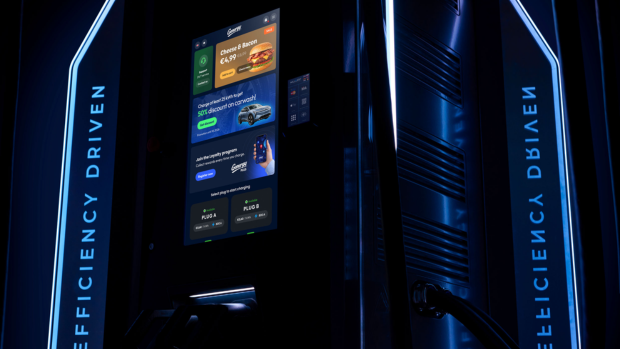
From Charger to POS
WILLBERT approaches EV charging as an extension of the retail POS ecosystem. With a fully redesigned user interface managed through the independent HAWKe platform, the charger becomes a digital transaction surface where payments, retail offers, and services meet.
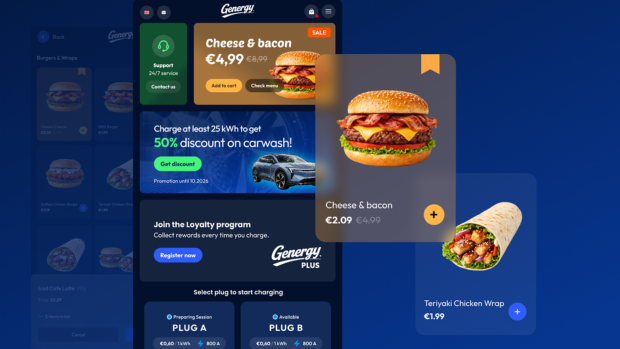
Industry data shows that embedded and in-journey commerce can increase basket value by 20 to 30 percent when customers are engaged at the right moment. WILLBERT charger is designed precisely for this purpose. As a key part of the home screen and entire charging journey, it allows EV drivers to browse and purchase products and services, without leaving the charging bay or downloading an app.
This aligns with the broader POS system revolution, where transactions move from fixed terminals to contextual, customer-driven touchpoints.
Secure Payments, Trusted IdentitiesFor embedded commerce to succeed, trust is non-negotiable. WILLBERT's payment infrastructure is built on secure, tokenized transactions that protect customer data while ensuring seamless experiences.
Every payment is processed using industry-standard tokenization, meaning sensitive card data never resides on the charger or in the operator's system. Authentication is frictionless through contactless card tap or mobile wallet, while maintaining full compliance with regulatory standards.
For operators, this means reduced fraud risk compared to other methods (charging application or RFID), simplified compliance, and the ability to offer secure, one-tap purchasing for both energy and additional goods. For drivers, it means confidence that every transaction, whether charging or buying, is protected by the same security standards they expect from modern digital commerce.
CLEAR UI, TRANSPARENT PRICING, MEASURABLE ROIOne of the biggest barriers to public charging adoption remains complexity. Confusing screens and unclear pricing reduce trust and conversion. WILLBERT’s new User Interface focuses on clarity, real-time information, and intuitive guidance, reducing friction at every step of the journey.
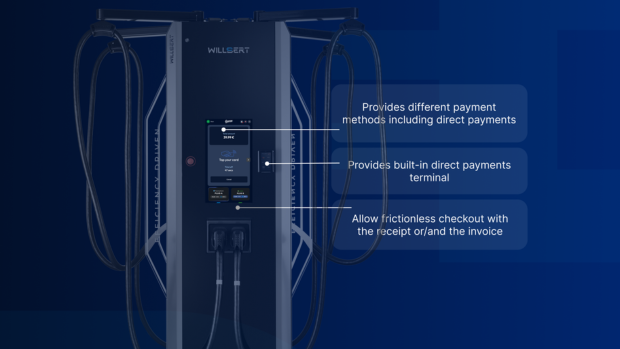
Payments are fully embedded and transparent, supporting bank card-based and contactless transactions that meet European regulatory standards. For retailers, this translates directly into performance. Research shows that charging sites with smoother payment systems and improved user experience tend to boost customer satisfaction and increase dwell time at retail destinations, creating stronger monetization opportunities for site owners.
Crucially, all content, offers, and communication displayed on the charger are centrally managed through the HAWKe platform, allowing retailers to dynamically adjust promotions, partner campaigns, and messaging based on time of day, location, or customer profile.
A EUROPEAN DC CHARGING ECOSYSTEM BUILT FOR PROFITABILITY
As a European manufacturer of high-power DC charging solutions, WILLBERT combines scalable hardware with a transaction-driven software ecosystem. The result is infrastructure that delivers energy reliably and improves the return on investment of every charging point by unlocking non-energy revenue streams such as retail sales, advertising, and partner services.
In a market where margins on energy alone are under pressure, the winners will be those who treat EV charging as part of a broader retail and transaction strategy.
Sources:
NACS Sate of the Industry Report of 2024 data
Exploring customer sentimental on electric vehicle charging
Embedded finance in Europe: How banks and customers platforms are converging