Hydrogen handling: What’s the story behind your hydrogen journey?
Published on: Dec 20, 2023
Fueling experts Dover Fueling Solutions (DFS) dive into how the hydrogen fueling market works in this expert article.
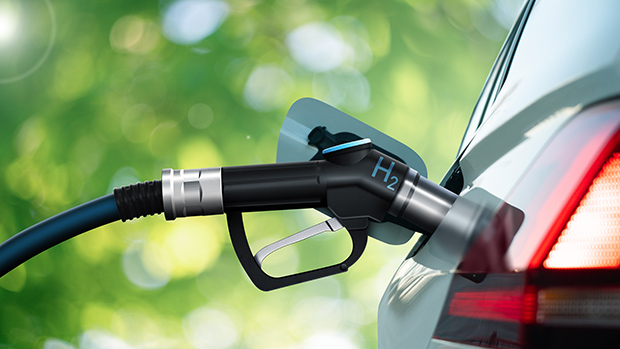

As Europe moves towards Net Zero, hydrogen offers a clean solution to parts of the economy that are difficult to decarbonise – particularly heavy-duty transportation.
The freight transport sector is traditionally harder to electrify as heavy goods vehicles (HGVs) require significantly more energy storage capacity than passenger cars due to their larger size and heavier load.
Hydrogen, an abundant natural resource, may provide a better option due to its traditional nozzle-filling familiarity.
The EU plans to have 6800km of H2 pipeline by 2030, with a greater demand for production than ever.
But how does your hydrogen get to the pump? How is it produced, transported and stored? Fueling expert, Dover Fueling Solutions, explores the potential challenges and opportunities of hydrogen handling for station owners.
How is hydrogen produced?
Hydrogen is produced in a number of different ways, with some processes creating more greenhouse gas emissions than others. Scientists have used colours to classify these accordingly, including:
- Grey: Most of today’s hydrogen production is grey, generated from natural gas or methane through steam reforming. This produces GHG and is the least eco-friendly.
- Blue: While undergoing steam reforming, a high proportion of the carbon generated can be captured and stored underground. This is classified as low carbon, blue hydrogen.
- Green: The most eco-friendly variant, green hydrogen is classified as completely carbon-free. This is made by using electricity from renewable sources to split water molecules into hydrogen and oxygen.
How is hydrogen distributed?
Hydrogen distribution typically occurs via three channels: pipes, high-pressure tube trailers for gas, and liquefied hydrogen tankers. However, this is generally very expensive, no matter the distribution method, meaning much hydrogen production takes place on-site or close to where it is used. Currently, the average price of hydrogen is between 15 and 20 euros per kilogram at retail sites.
Pipeline: Pipelines remain the least expensive way of distributing hydrogen. Presently, Germany has the largest hydrogen pipeline infrastructure with 3827km in length. Bulgaria has 3312km and Italy 2552km. This is a strong option for larger hydrogen stations.
Tube trailers: These make up another part of the Hydrogen highway. Typically, because of the use of trucks, railcars, ships or barges, these may be a more expensive option. These are especially effective for smaller-capacity hydrogen stations.
Hydrogen tankers: Through the cryogenic process, hydrogen is cooled to a temperature where it becomes a liquid. Although this can be expensive, it allows for more efficient transportation either by truck, railcar or ship and are an effective mean of carrying as much hydrogen as possible between continents. Liquified hydrogen at a temperature of -253°C (absolute zero being at -273°C thus 0° Kelvin) allows more hydrogen to be transported & stored.
Hydrogen on-site: On-site hydrogen production using an electrolyser or a steam methane reformer is another option. Generators need to be hooked up to electricity or a natural gas source for independent hydrogen production. High-pressure storage tanks allow for large volumes of hydrogen to be stored in a small space.
How is hydrogen stored?
Once the hydrogen has reached your refilling station or forecourt, the fuel can be stored physically as a gas or a liquid.
Gas storage will typically require high-pressure tanks up to 1000 bar tank pressure, while for liquid storage hydrogen will again need to be cooled around -253 degrees Celsius
One benefit of storing via gas is that gaseous hydrogen can be stored for long periods without losing gas. It does, however, come with its challenges of high pressurisation.
Dispensing hydrogen
The ultimate goal is for hydrogen to deliver a similar refueling experience to traditional fuel. This has, however, transitioned from early passenger car experiments in California to more of a heavy-duty transport experience in Europe.
Because of its gas form, the dispensing is more comparable to Compressed Natural Gas (CNG). Statistically, hydrogen dispensers currently deliver a flow rate of around 3.6kg per minute, or 60 gr/sec, with the market presently aiming at higher flow rates of 7.2kg to 10kg per minute on average, to optimise the refilling experience for drivers.
“Green hydrogen has emerged as one of the greenest alternatives to fossil fuels, particularly within the heavy-duty transport sector. For those looking to make the transition, station owners should invest in the requisite certified dispensers in addition to cooling stations/chillers to improve flow rate and capacity," says Domenico Sicilia, Business Development Director at Dover Fueling Solutions, when looking to embrace hydrogen adoption.
“Our DFS Hydrogen dispenser has been expertly designed for reliable performance against a low total cost of ownership. It harnesses cutting-edge technology to provide H35 and H70 dispensing alongside an intuitive, digitised user experience. If you’re looking to embrace a cleaner, greener future, we’d be happy to assist wherever the road may take us," he adds.


By Dover Fueling Solutions