Is hydrogen ready for the forecourt?
Published on: Dec 10, 2024
Advertorial
As the global energy landscape shifts towards sustainability, hydrogen is emerging as a key contender in the race for zero-emission transport. Its versatility, rapid refueling times, and compatibility with both light- and heavy-duty vehicles make it an attractive alternative to traditional fossil fuels and battery electric vehicles (BEVs). However, the question remains, is hydrogen ready to take center stage at the forecourt? Let’s explore the infrastructure, technology, and policies shaping this transition.
Hydrogen infrastructure - adapting for the future
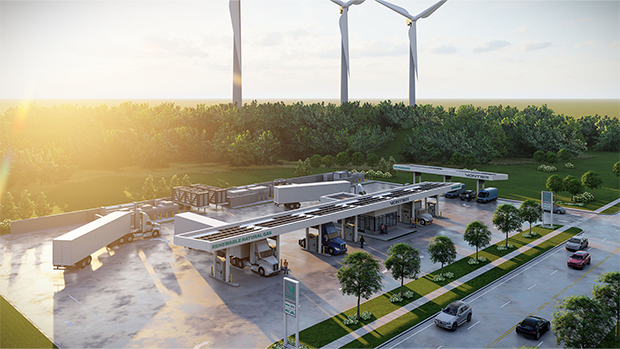
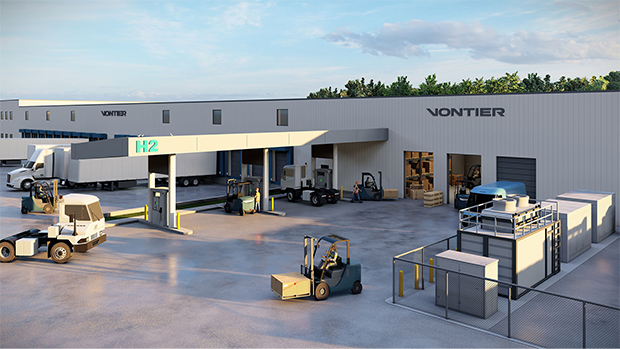
Hydrogen's potential hinges on the development of an effective refueling infrastructure, tailored to diverse transportation needs. Forecourts of the future will likely diverge into two distinct categories: urban refueling ‘pitstops’ designed to best serve passenger and light-to-medium duty vehicles with convenience on-the-go, and highway refueling destinations with a suite of services designed to cater to the needs of trucks and other heavy-duty vehicles.
Urban refueling stops will continue to integrate seamlessly into city landscapes, increasingly prioritizing EV charging as part of a multi-energy mix. Designed with smaller footprints by necessity, urban stations combined with convenience stores and an emerging breed of smaller self-service and autonomous payment solutions, will offer quick refueling solutions for light to medium duty fleets and individual private vehicles.
Positioned strategically along major routes and freight corridors, highway stations will be optimized to accommodate the evolving needs of heavy-duty vehicles like trucks and buses. Offering a range of fuels - including hydrogen, biomethane, and compressed natural gas (CNG) - these stops will support long-haul operations with ample space for manoeuvring, rest breaks, and rapid refueling.
In the US, the launch of the Seven Hydrogen Hubs is geared towards strategically supporting the development of critical hydrogen infrastructure, creating a comprehensive network that connects hydrogen producers, consumers and local infrastructure. This initiative aims to promote clean hydrogen adoption, with a particular emphasis on transforming heavy industry, including transportation. Similarly, in Europe, the Trans-European Transport Network (TEN-T) represents an ambitious initiative to develop a sustainable and interconnected transportation system by 2050.
Both the US and European approaches share a common goal of advancing hydrogen mobility by strategically equipping truck stops and urban refueling points with alternative fuels capabilities. These coordinated efforts are critical for enabling seamless, sustainable transportation and reducing carbon emissions in challenging sectors like long-haul and heavy-duty transportation.
Hydrogen combustion engines: A new era of mobility
While hydrogen fuel cells dominate discussions about zero-emission vehicles, hydrogen combustion engines powered by liquid hydrogen are also gaining traction. Several automotive manufacturers and tier one suppliers such as Toyota, Cummins and Bosch are exploring this technology for both light-and heavy-duty vehicles, offering a low-emission alternative to both traditional internal combustion engines (ICEs) and range-limited electric drivetrains.
Hydrogen combustion engines function similarly to gasoline engines but produce water vapor as their primary emission. Their compatibility with existing vehicle platforms and infrastructure makes them an appealing option for automakers and consumers transitioning away from fossil fuels. As low-carbon hydrogen production scales up, hydrogen combustion could become a viable and cost-effective solution for certain segments of the transport market.
The convenience of rapid refueling
One of hydrogen's biggest advantages over battery electric vehicles (BEVs) is the refueling time. While charging a BEV can take 20 minutes or more (even with ultra rapid charging stations) hydrogen vehicles can be refueled in under five minutes, thanks to advances in dispensing technology, mirroring the experience of conventional gasoline and diesel pumps. This speed makes hydrogen particularly appealing for commercial fleets and long-haul vehicles, where downtime equates to lost revenue.
Moreover, hydrogen refueling is user-friendly and highly similar to traditional fueling processes. Customers simply connect a pump to their vehicle, with safety mechanisms ensuring secure and efficient dispensing. This familiarity could ease consumer adoption, bridging the gap between fossil fuels and cleaner alternatives.
ANGI Energy Systems is leveraging this advantage to create seamless refueling experiences. By integrating user-friendly designs and advanced dispensing, payment and multimedia-at-pump technologies, ANGI ensures that hydrogen refueling is as intuitive as pumping gas.
Dispelling myths when it comes to hydrogen safety
Despite its promise, hydrogen faces public scepticism, often rooted in concerns about safety. However, a closer look reveals that hydrogen is no more hazardous than conventional fuels, and in many cases, it’s even safer.
- Hydrogen’s low density causes it to disperse rapidly in the air, reducing the risk of fire in case of a leak
- Hydrogen fuel cells incorporate state-of-the-art safety systems designed to prevent leaks and manage pressure. These features often surpass the safety measures found in traditional combustion engines
- Hydrogen can be safely transported via high-pressure cylinders, pipelines, or in liquefied form, using established protocols refined over decades
- The hydrogen industry is highly regulated, adhering to global standards and protocols such as the SAE J2601-5 Standard and ISO 19880, ensuring safety and consistency in hydrogen production, storage, and distribution.
These advancements, combined with rigorous safety standards, ensure that hydrogen refueling stations are as safe as, if not safer than, their fossil fuel counterparts.


Paving the way for hydrogen adoption
The transition to hydrogen is being accelerated by global policy initiatives aimed at decarbonizing transportation. The European Green Deal, for instance, mandates a 90% reduction in greenhouse gas emissions from transport by 2050, with significant milestones set for 2030 and beyond:
- By 2030:
- At least 30 million zero-emission vehicles will be operational on European roads
- 100 European cities will achieve climate-neutral status
- Zero-emission vessels will become market-ready
- By 2050:
- Nearly all new cars, vans, buses and heavy-duty vehicles will be zero-emission
- The TEN-T network will be fully equipped for sustainable and smart transport
Additionally, bans on new light-duty ICE vehicles by 2035 and heavy-duty vehicles by 2040 in the EU and UK further emphasise the urgency of adopting zero-emission solutions. Hydrogen, with its scalability and versatility, is well-positioned to play a central role in achieving these goals.
In the United States, The U.S. Department of Transportation Federal Highway Administration (FHWA) designates a national network of Alternative Fuel Corridors (AFC) which consist of EV charging and hydrogen, propane, and natural gas fueling infrastructure located along national highway system corridors. This initiative complements the Inflation Reduction Act, which includes regional hydrogen refueling hubs – as well as various initiatives to incentivise the adoption of low carbon vehicles – to encourage investment in clean energy solutions.
For ANGI Energy Systems, these regulatory frameworks are both a guide and an opportunity. The company’s ability to design and deploy hydrogen refueling and multi-energy stations that meet stringent regulatory requirements positions it as a trusted partner for governments, fleets and private stakeholders alike.
Green hydrogen: A sustainable fuel for the future
Hydrogen’s potential hinges on its ability to be produced sustainably. The push for low-carbon hydrogen – generated using renewable energy – is reshaping the production landscape. New zero- and low-carbon hydrogen production facilities are emerging worldwide, driven by a commitment to decarbonization and energy security.
For ANGI Energy Systems, low-carbon hydrogen represents a critical component of its vision for a sustainable future. By supporting low-carbon hydrogen production and integrating it into refueling networks, ANGI is helping to close the loop on clean energy.
Future-proofing refueling stations
As hydrogen infrastructure scales, the design and functionality of refueling stations will evolve to meet future needs. By 2050, nearly all vehicles on the road are expected to be zero-emission, with hydrogen expected to play a central role in the heavy-duty sector. Stations will incorporate multi-modal refueling options, high-speed connectivity, and smart energy management systems.
ANGI Energy Systems is already laying the groundwork for this transformation. By combining innovation with scalability, modularity, and software capabilities, the company is ensuring that its refueling solutions remain relevant in a rapidly changing energy landscape.
Challenges and opportunities
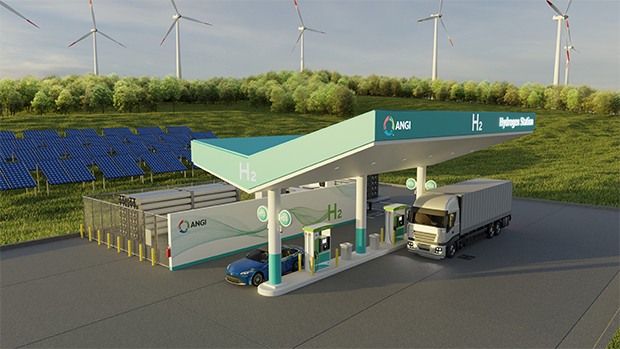
While hydrogen – like many alternative energies – offers immense potential, its widespread adoption is not without challenges. Building a comprehensive hydrogen infrastructure requires significant investment, coordination and public-private partnerships. Fortunately, this is an area ANGI Energy Systems can help with. With decades of experience in dispensing gaseous fuels, we can coordinate the entire process, from feasibility study to the installation of complete hydrogen refuelling and EV charging stations.
There are hurdles to overcome, but hydrogen’s versatility – spanning automotive, maritime, rail, aviation and industrial applications – makes it a cornerstone of the global energy transition. Its ability to complement other clean technologies, such as BEVs, in the future energy mix ensures a diversified and resilient energy landscape. By addressing these challenges head-on, hydrogen can transform forecourts into hubs of innovation and sustainability, paving the way for a cleaner, greener future.
In conclusion, is hydrogen ready for the forecourt?
Here at ANGI Energy Systems we believe the answer is a resounding "yes", but with a caveat. While hydrogen is technologically ready and policy-backed both in the US and Europe, its success depends on continued investment in infrastructure, production, and public awareness. By prioritizing collaboration and innovation, stakeholders can ensure hydrogen’s seamless integration into the transportation ecosystem.
As the world accelerates toward net-zero emissions, hydrogen stands out as a powerful enabler of change. Its presence at forecourts, whether in urban centres or along highways, signals not just a shift in energy but a commitment to a sustainable future. Hydrogen isn’t just ready for the forecourt, it’s ready to redefine it.

By ANGI Energy Systems