NACS Show 2025: Five trends defining the future of convenience
Published on: Oct 24, 2025
From AI-powered loss prevention to TikTok-fueled snack crazes, NACS Show 2025 captured a U.S. convenience industry in full reinvention. Check out MobilityPlaza's top 5 trends.
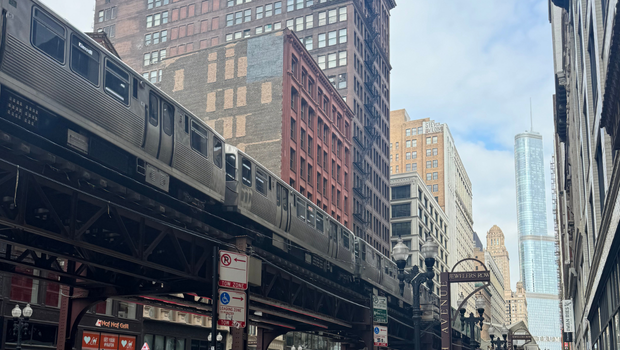

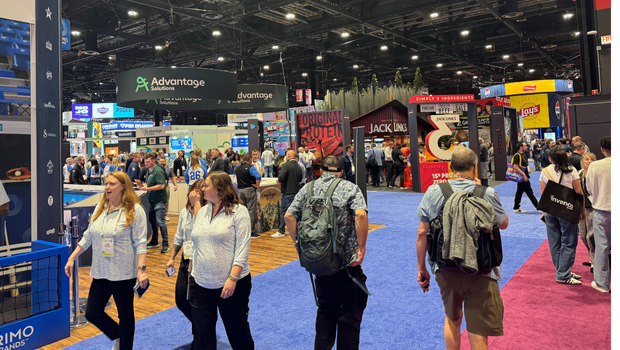
Chicago’s McCormick Place was buzzing. The NACS Show 2025 — held from October 14 to 17 — drew a record 25,136 attendees from 73 countries, marking the third consecutive year the event set an attendance record for its host city. Following record-breaking crowds in Atlanta (2023) and Las Vegas (2024), this year’s edition cemented NACS as the beating heart of the global convenience and fuel-retail industry: four days of education, networking and a glimpse of what’s hot (and profitable) in an innovative sector.
Retailers walked the floor with strong confidence, talking about new site builds and expansion plans despite economic headwinds. On the other hand, suppliers appeared more cautious due to tariffs, inflation, and supply-chain pressures.
Five trends stood out to the MobilityPlaza team from the three days in the Windy City.
1. AI takes aim at shrinkage
Shrinkage dominated many of this year’s tech discussions. What used to be just another number on the profit and loss statement has now become a key battleground for artificial intelligence.
Companies demonstrated how machine-learning models and AI can pull data from POS terminals, cameras and back-office systems to detect anomalies long before they show up in reports. These platforms can spot patterns of refund abuse, self-checkout manipulation, or mis-scanned SKUs, allowing operators to act early and precisely.
In one real-world example, an AI tool identified recurring nighttime inventory discrepancies tied to one category of snack goods, losses fell 7% within weeks after the alert.
2. Retail media becomes mainstream in the U.S.
If there was one word on every operator’s lips, it was retail media. Digital screens were everywhere across the technology floor: at the pump, on the EV charger, on smart fridges, in the self-checkout kiosk. The message was clear: attention has become its own revenue stream.
This shift is redefining the economics of the forecourt. Retailers are discovering that the same few minutes a driver spends refueling or charging can be monetized through targeted advertising and order-and-pickup. New platforms can serve dynamic content by time of day, weather, or vehicle type, while linking campaign data back to loyalty systems to track conversion.
In the last six months, EG America, Parker’s Kitchen, bp, Casey’s, and Love’s have all launched or upgraded their retail media networks, showcasing how it’s one of the fastest-growing advertising segments, with CPG companies seeking ways to influence purchasing decisions at the point of sale.


3. TikTok and the rise of the viral snack economy
Retailers spoke less about ingredients and more about algorithms. TikTok, Instagram and YouTube have become the new product scouts, turning ordinary snacks into overnight sensations.
The Dubai pistachio knafeh chocolate bar, a social-media darling, became shorthand for a new type of merchandising. Buyers now monitor hashtags and influencer trends as closely as they do sales data. When a product blows up online, the race is on to stock it before the moment passes.
Retailers are adapting, some dedicating entire sections to “as seen on TikTok” products, blending online buzz with real-world discovery. The use of TikTok dashboards allows retailers to tackle the trends quickly. What happens online now directly dictates what lands on shelves.
4. THC beverages: the hottest (and trickiest) new frontier
Few topics sparked more hallway debate at this year’s NACS Show than THC-infused products. According to the Brightfield Group, U.S. sales of hemp-THC beverages were worth $382 million in 2024 and are projected to nearly double to $750 million by 2029. Supporting that momentum, Carnegie Mellon University research shows that daily or near-daily cannabis consumers have now surpassed daily alcohol users, signalling a cultural shift that convenience retailers can’t afford to ignore.
It’s also a shift attracting serious investment. Alimentation Couche-Tard has begun rolling out THC-infused drinks through selected U.S. stores, partnering with beverage makers to test the market and consumer response.
As Rebekah Stevenson and Diana Eberlein noted in their NACS presentation “Opening the Door for THC,” the category’s future depends on “education, compliance and careful rollout.” Regulations vary dramatically from state to state, and what’s legal in one ZIP code can still be a felony in another. Retailers were urged to work closely with lawyers, distributors and state agencies before committing shelf space.
5. EV tech steadies, matures, and converges
If any topic captured both ambition and realism, it was electric mobility. The slowdown in EV sales in 2025 had clearly recalibrated expectations. Many operators saw the lull as a strategic pause: a chance to catch up on infrastructure, streamline permitting, and get cybersecurity right before scale returns.
Panels like “Putting the EV in Revolution” drew packed audiences. Experts argued that the market is entering its foundation phase, where smart tools for planning and faster drawing submittals may do more for rollout speed than another generation of chargers.
Retailers spoke of integrating charging with foodservice, retail media, and loyalty programs, a cross-pollination of trends that is already redefining the forecourt experience in markets like Denmark. The EV story is evolving from hype to hardware, from promise to practicality.