Q&A with Om Shankar: “Konect by GVR is the next piece of the Vontier EV story”
Published on: Jul 26, 2024
We talk to Om Shankar, Vice President & General Manager at Konect, about the launch of the EV charging platform for convenience stores and service stations.

Q. Gilbarco Veeder-Root has launched Konect. What was the idea behind this new e-mobility brand?
A. Gilbarco Veeder-Root (GVR), a company with a 150-year history and the most prolific fuel dispenser company in the world, is focused on the future of convenience retail and the evolving car park landscape. While we believe that internal combustion engine (ICE) vehicles will remain prevalent, we are committed to providing our customers with the technology to facilitate and profit from the EV transition.
We view the business model around electric vehicle charging as more than just selling electrons through a charger; it’s a comprehensive, holistic approach. Our "watt-to-wheels" strategy encompasses the entire electron journey – from the energy source to battery storage, then from the battery to the charger to the vehicle, and finally, engaging the consumer inside the fuel retail convenience store.
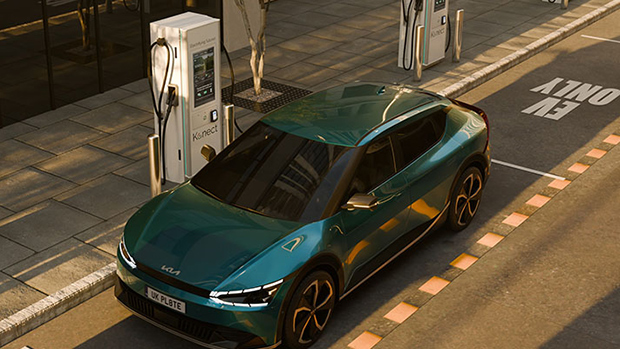
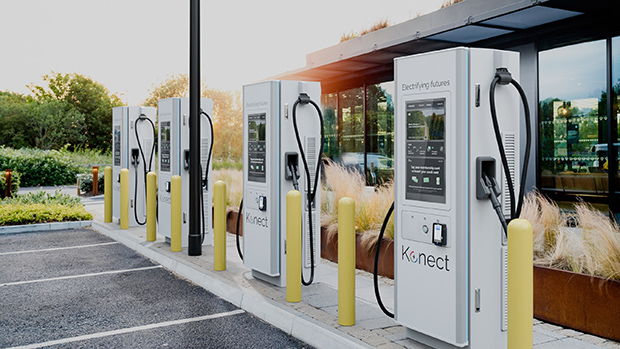
Konect is the next piece of the Vontier (GVR’s parent company) EV story. It integrates all the software and hardware infrastructure we've developed over the past six years into what we believe is the most powerful turnkey EV charging ecosystem for the convenience store industry.
Q. So the goal is to provide an ecosystem for service stations to dive into e-mobility?
A. Yes. Konect has access to the best payment, media, human-machine interface, loyalty, and backend capability in the world alongside the best dispenser-building capacity. We have formed a strategic partnership with SK Signet, a Korean company that has extremely robust power electronics capabilities, and jointly built a vertically integrated EV charger that offers a compelling charging solution for fuel retail.
Tesla has been able to craft a much-envied charging experience thanks to its vertically integrated ecosystem. They had all the resiliency and the robustness needed in an ecosystem, and no one else was able to recreate that, until now. We want to build an ecosystem purpose-built for the fuel retail industry.
The charging experience today is improving, but could be better. You don't have the same challenges in the fuel retail industry. You go to a petrol station, there's going to be petrol or diesel flowing through the dispenser. It’s on us to recreate that for the EV driver.
Q. There are several successful EV charger brands that have taken a large share of the market. What does Konect have to do to compete in this space?
A. We're building something purposeful for the c-store, as we believe that’s where the future of EV charging will take place. Fuel retailers have the right location and amenities to attract customers and cover that dwell time. No one can create technology that provides a similar experience to that of fueling like us. We can connect the charger to the retail backend systems that already exist. You don't need a year-long project to integrate the payment to the POS and the back office.
We don't want to be known for selling chargers. There are great people doing that already. I want to sell a business model that is focused on making EV charging profitable for the c-store, and that's done by looking at the experience much more holistically.
We can take a battery, put it on a site, and use it to store energy. When energy goes unused, it can be sold back to the grid. Let's make sure that our customers are accessing, sourcing, and deploying energy in the right way. Chargers need to use that energy intelligently, and they can be completely off-grid with a battery as well. We want to improve time to value, provide a robust experience at the charger, and utilize the most powerful service ecosystem in the world through our Vontier network. Profitable revenue streams are unlocked when you're looking at this end-to-end ecosystem that's much greater than just pumping electricity into a car.
Q. Many stations are suffering with profitability, uptime, and activation times when it comes to charging…
A. The market is changing, with or without fuel retailers. A study by Boston Consulting Group suggests that 80% of fuel retail outlets will be unprofitable by 2035 if they don't change their business model. So the EV transition isn’t really a choice.
But there is support available. The National Electric Vehicle Infrastructure (NEVI) fund in the US, for example, is a $5bn pot of financial support available for new EV charging infrastructure. 68% of successful awards so far have gone to the c-store.
We want to play a role in supporting fuel retailers make a successful, and profitable, transition to EV - and the mission of getting more plugs deployed is what keeps us motivated, every day. We see an approximate 20% utilization rate needed on EV chargers for retailers to break even. That assumes a 24/7 uptime to maximize busy periods.
With the right technology and support, 99% uptime is achievable. All a fuel retailer needs to make a successful transition to EV is power and space, and support and insight from a company like Konect. GVR and its parent company Vontier have invested a tremendous amount over the last few years to build out the most powerful data and analytics group in our industry. One thing that they built for us is a software offering that allows us to understand grid availability, utilization predictions, and sales inside the store site by site. Holistically, we can help our customers make the right investments.
Q. We’ve seen a lot of Vontier activity in recent years. There have been a number of acquisitions and the company has segmented its business into new areas – GVR, ANGI, Invenco by GVR, Juxta, and now Konect. Could just tell us a little bit about the broader strategy of Vontier?
A. Vontier’s new tagline is “enabling the way the world moves.” And I absolutely love that. It speaks to our overall ethos that the future is not going to be dominated by one source of energy. GVR has created a beautiful legacy in the fueling industry over the last 150 years. This is the time for us to invest in the future and be seen as true innovators. ANGI is the most comprehensive gas and hydrogen infrastructure ecosystem in the world. We continue to develop our ICE-based offerings through Gilbarco Veeder-Root. We really believe in e-mobility and we're taking a bullish approach, as showcased by our acquisitions in Driivz and Sparkion. ICE is going to be around and will be important for the rest of our lives. But why can't we invest now in the future and make sure that we enable the way the world moves irrespective of how the car park plays out?
Q .You launched the Konect brand at UNITI expo May 2024. How was that experience?
A. It was hugely exciting to finally show off what we've been building over the last few years. But even more than that, it was invaluable for us to listen to so many voices from the industry – to hear about the challenges they’re experiencing with electrifying their business model, but also the incredible opportunities they want to seize.
From all of our conversations, it’s crystal clear to us that fuel retailers need to see a robust business-case for EV charging. And that’s what we created Konect to deliver. We're putting our foot on the accelerator and laying strong foundations for the next 150 years of our company.
Q. With huge players like OEMs and utility companies offering public charging, what role do you see service stations playing in the public fast charging ecosystem?
A. There are four different archetypes when it comes to the charging network: OEMs, utility companies, traditional CPOs like Electrify America, and fuel stations. Utility players and OEMs were really critical at the onset to help convince people to make that powertrain shift. Tesla did an incredible job.
We think over time the best experience is one that not only helps people gain access to electricity to recharge their EV batteries, but also one that helps our customers utilize that dwell time efficiently. In the U.S., you can see this happening in front of our eyes: as mentioned, nearly 70% of the National Electric Vehicle Infrastructure (NEVI) program is being awarded to convenience stores.
There's no one better situated to enable that charging experience than fuel retailers. They have the right locations everywhere in the world. They have the right offerings, they are safe and they are familiar to people. McKinsey found that EV drivers were willing to pay 10% more to plug in close to the highway if it meant avoiding a detour. No one else has that.
There’s certainly a role for all four archetypes I’ve mentioned, but if the question is, who can serve the consumer best? It's clearly the c-store and fuel retailers. And it's the next part of their journey.