Tesla enhances Supercharger wait-time forecasts with AI
Published on: Apr 27, 2026
Updated forecasting model improves queue accuracy at busy sites, helping drivers plan charging stops with greater confidence.
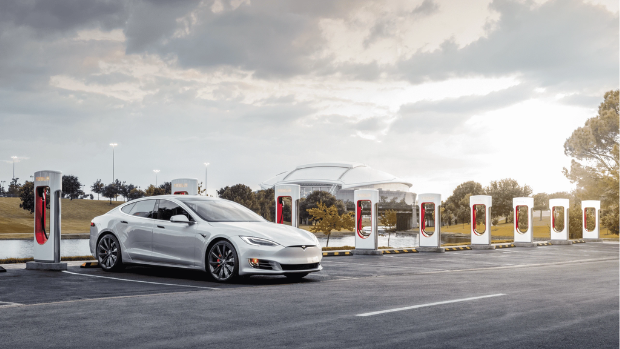

Tesla Charging has upgraded its Supercharger forecasting capabilities, aiming to provide more accurate wait-time estimates as part of its efforts to reduce congestion and improve the charging experience.
The company announced on X the news, highlighting that Trip Planner already uses real-time traffic data within geofenced areas around Superchargers to predict how many vehicles are likely to arrive and charge. These forecasts help optimize routing by estimating site occupancy and potential queues. However, predicting wait times has been more complex at locations shared with other amenities, where not all vehicles entering the area intend to charge.
To address this, Tesla is rolling out a new machine learning model designed to better identify vehicles with charging intent. The model is trained on aggregated and anonymized trajectory data covering 9 million miles driven near Superchargers worldwide, improving its ability to distinguish charging behavior from other site traffic.
As a result, Tesla says queue length estimation errors have been reduced to about 20%. In rare cases where more than 10 vehicles are waiting, the system can now forecast queues with an error margin of just one to two vehicles. The improvement is expected to help drivers better anticipate delays and make informed decisions when planning longer trips.
The update leverages Tesla’s vertically integrated approach, combining vehicle data, charging infrastructure, and software development within a single ecosystem. According to the company, this integration enables more detailed insights into charging demand patterns than would otherwise be possible.