The Era of Sustainability: The Rise of Alternative Fuels
Published on: Feb 19, 2025
Advertorial
The global shift towards sustainability has never been more active, particularly in the transportation sector, which remains a major contributor to greenhouse gas emissions around the world.
In the midst of this shift to alternative fuels such as Compressed Natural Gas (CNG), Liquefied Natural Gas (LNG), and Hydrogen are emerging as viable alternatives for reducing carbon footprints in the commercial and heavy-duty transport industry.
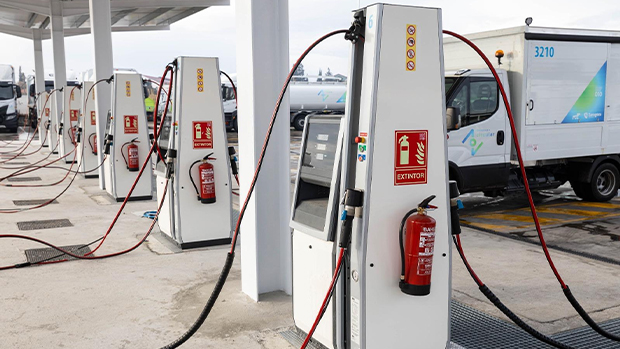




Compressed Natural Gas (CNG): A Cleaner Transition
CNG is considered one of the cleanest fossil fuel alternatives available on the market today.
It is primarily composed of methane, and when burned, it emits only carbon dioxide and water vapor—elements which are already naturally present in the atmosphere—helping to significantly reduce greenhouse gas emissions compared to traditional fuels.
There are also cost advantages to CNG, as it is generally cheaper than other conventional fuels, making it an attractive alternative for fleet operators looking to balance sustainability with financial feasibility.
Dover Fueling Solutions® (DFS) is one of the leaders in providing advances to CNG fueling solutions, including infrastructure that supports the widespread adoption of CNG for transportation fleets.
Liquefied Natural Gas (LNG): Reducing Emissions for Heavy Transport
LNG is one alternative fuel that is gaining traction, particularly in the heavy-duty transport sector.
As a low-emission fuel, LNG produces 40% less carbon dioxide than coal and 30% less than oil, making it a popular transitional energy source.
LNG’s major advantage is its compatibility with bio-LNG, which can reduce CO2 emissions by up to 85%, helping the journey toward global decarbonisation targets.
With the growing network of LNG refueling stations, especially in Europe and Asia, the long-haul transport industry is one which is monitoring LNG closely as a practical alternative to diesel.
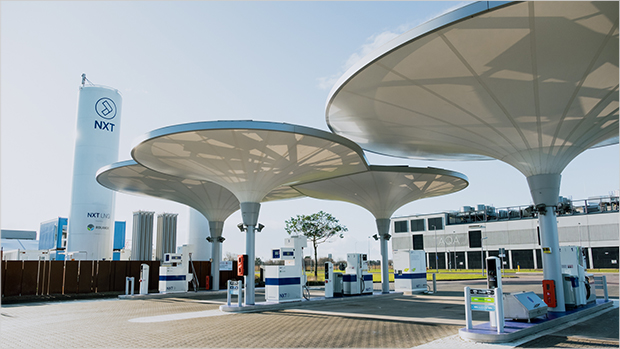
Hydrogen: The Future of Zero-Emission Transport
While still in its early stages of widespread adoption, hydrogen fuel cell technology presents a fully emission-free alternative for heavy transport, public transit and industrial applications.
Infrastructure development has been one of the leading stumbling blocks for the rollout of hydrogen refueling stations. However, investment in hydrogen production and distribution is moving at an accelerated pace with various industries listening to the long-term potential of hydrogen as a sustainable energy source.
The UK government unveiled the funding of 11 green hydrogen projects across England, Scotland, and Wales in late 2024. These projects have a combined capacity of 125 MW and are among the first commercial-scale green hydrogen initiatives globally. The UK has allocated £3.9 billion ($5 billion) for green hydrogen production and carbon capture projects as part of its 2025–26 budget.
In December, the UK government also unveiled the largest set of commercial-scale green hydrogen projects in Europe to date.
Through the first Hydrogen Allocation Round (HAR1), funding was granted to projects totalling 125MW of production capacity.
Simultaneously, the government launched the second Hydrogen Allocation Round (HAR2) aiming to support up to 875MW of capacity.
At the time of the announcement, Rt Hon Claire Coutinho MP Secretary of State for Energy Security and Net Zero claimed the UK is “now entering a period of unprecedented growth for the UK hydrogen economy.”
The Road Ahead for Alternative Fuels
As the transportation sector continues its evolution path, CNG, LNG, and Hydrogen will each play a pivotal role in reducing emissions and enhancing fuel sustainability.
Over the next five to ten years, refueling infrastructure is expected to evolve to accommodate hydrogen, CNG and LNG vehicles. Advanced heavy-duty refueling stations will incorporate hydrogen refueling and smart digital systems to optimise fleet management and improve operational efficiency.
Companies who are opting to invest in alternative fuel infrastructure now will be best-placed during the transition towards cleaner energy.
As the world transitions toward a more sustainable future, businesses must act now. By adopting innovative fueling solutions and integrating eco-friendly practices, we can collectively drive meaningful change. DFS is committed to leading this transformation. Click here to learn more about DFS’s sustainable fuel solutions.