Alberto Herrero (Zunder): “Building a hub can take twice as long in Spain as in France”
Published on: Jun 18, 2025
Zunder is one of Spain’s fastest-growing ultra-fast EV charging networks, combining the hands-on operation of charging hubs with proprietary software solutions. Alberto Herrero Mañanes, B2B Director, discusses the company’s expansion across Europe and the challenges of e-mobility in Spain.
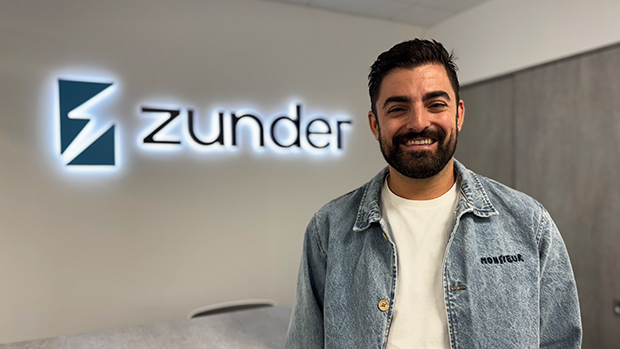

MobilityPlaza: Let’s start from the beginning. How did Zunder come to life?
Alberto Herrero: Our CEO Daniel Pérez has been an EV user for almost 15 years. As an early adopter he constantly ran into issues, above all the lack of charging points. About ten years ago, he even had to spend the night in a lady’s garage because he got stranded with nowhere to charge.
Around 2017, Daniel teamed up with our other co-founder Lorenzo. Their first idea was to build a collaborative tool to map out existing charging points. But they quickly realized the real problem wasn’t mapping, it was the lack of chargers.
That’s when they decided to raise funds to build a charging network themselves, giving birth to EasyCharger in 2017. We later became Zunder in May 2022. From day one, we’ve combined two core strengths: operating charging points and developing our own software.
MP: There are two sides to the Zunder business. You run a European network of charging hubs and you sell your Charging Point Management System.
AH: We run 186 active charging hubs, most of them in Spain. We have about ten operational stations in France. In Portugal, it’s a different setup because of the government-operated Mobi.E network. Belgium will be our next market as a CPO.
Our model is simple: we invest in infrastructure to sell energy, much like oil companies do with fuel. Our margin comes from the difference between the price we buy electricity at and the price we sell it for.
In addition, we sell our proprietary software. Public and private companies that want to roll out chargers can manage operations and transactions through our SaaS platform. We also build private hubs, offer technical support, handle customer care, and have partnerships with fleet operators.
MP: How have you experienced the growth of e-mobility in Spain? Has it met your expectations?
AH: Emerging industries like ours need big players to drive momentum. In Spain, that’s the utility companies and oil majors. It’s telling that a historically oil-focused company like Cepsa now brands itself as a multi-energy provider. Repsol is walking a similar path.
There’s been a real shift in mindset. Today, EVs are everywhere — on TV, radio, podcasts, and even during the half-time break in football. The idea of driving electric is becoming normal, and people increasingly look at the total cost of ownership, not just the purchase price. Subscription models for acquiring vehicles have also become more mainstream.
The price gap between combustion and electric cars is closing. It’s true we’re not exactly where we thought we’d be two or three years ago but we’re not far. The evolution of the sector and the forecasts for sales and consumer habits point in the right direction.
MP: Last year, you were named Best Ultra-fast Charging Operator 2024. How does your subscription model contribute to this success?
AH: Of the 200,000-plus EVs in Spain, over 100,000 unique users are on our app. The award comes from the EV Users Association (AUVE). They are internal surveys and voted by users themselves.
Subscriptions make life easier for regular users. We also have dedicated deals for fleet operators, giving them bigger volume discounts. We work with ride-hailing services, taxis, long-haul transport — this lets us offer flexible pricing structures.
Our network is now broad enough that drivers don’t worry about a lack of infrastructure. And if you can’t reach one of our stations, you can still roam through the app or with our card. Promotions, partnerships, and discounts help us attract more drivers.
MP: One persistent industry challenge is charger maintenance. How do you ensure network reliability?
AH: Some players in this market have other revenue streams, so if their stations don’t work, they survive. We don’t have that luxury — if we don’t sell energy, we close down. So we simply can’t afford to deliver a bad experience.
The sector’s past mistakes, like abandoned or poorly maintained chargers, are exactly what we want to avoid. We live off this alone, so we do everything in our power to keep the network in top condition.
Drivers must feel confident they can get in their car and charge without hassle at most stations. Automakers know this too: they’re investing more in real-world tests because they know once people try an EV, they rarely go back.
MP: Are you exploring additional services like convenience or coffee?
AH: It depends on the location. We’ve already closed deals to add vending services at some sites. We focus mainly on professional users who frequent our stations, but we also want to offer perks to private drivers.
In Spain, you don’t see restaurants along highways as often as in France but that’s changing. Interestingly, the clean, modern feel of an EV station is becoming attractive to many brands. If we can guarantee enough footfall, food and retail brands want in. In Central Europe, charging stations with restaurants are already the norm.
MP: What usage rates do you see across your network? What’s your benchmark for success?
AH: On average, our stations run at about 15–16% occupancy, but some go as high as 80–85% because of repeat fleet usage. In a network of 186 stations, you get a mix. I think few networks can honestly claim these averages. If someone says they run at 85% across the board, they are probably lying. If we look at the penetration of EVs in Europe, we are quite happy with these ratios.
MP: How do you view competition from multi-energy stations? Some concepts like Gridserve aim to replicate a highway service area for EVs.
AH: I think we’re mostly complementary. These technologies will coexist. The message that combustion ends in 2035 was poorly communicated. We’ll still have combustion engines, EVs, e-fuels and hydrogen. We’re simply another option in this transition.
Do we want to become the next Gridserve? It’s an interesting concept but still niche. We prefer to complement existing locations. If a site has a café or bakery that bodes well. Our model is unattended charging. Since we offer ultra-fast charging, we want drivers to spend as little time as possible on-site.
MP: Would you compare yourselves to an unattended fuel operator like Ballenoil?
AH: I often say our business models are similar. The difference is they pursue a very aggressive low-cost policy, and that’s not our approach.
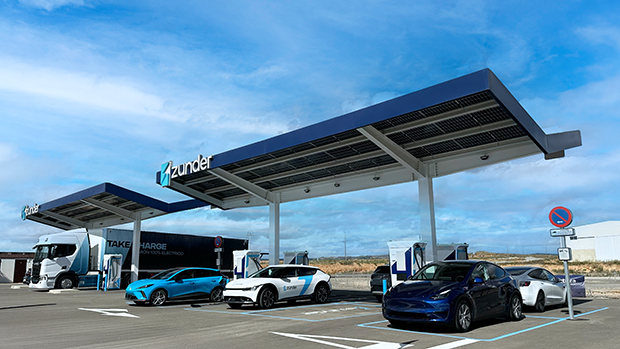
We’re a project that invests more up front to give users added value like installing canopies so you don’t get wet when it rains. We know this hurts short-term profit, but it builds long-term loyalty.
MP: In terms of user experience, how do you handle challenges like interoperability and payments?
AH: It’s a young industry, but today’s customers expect to pay by card anywhere. It’s only logical that regulations push operators to make life easy for drivers.
Since 2022, we’ve installed POS terminals and accept RFID. We did this before it became mandatory because it felt right. If you can pay with your smartwatch at the supermarket, why not at a charger? We also offer Plug & Charge: if your car and our charger are compatible, you just plug in and go. Our aim is always to give drivers maximum freedom.
MP: What are the biggest challenges for EV growth in Spain?
AH: We need to sell more cars. The rest is already being tackled by the industry: installation times aren’t ideal, but they’re known. For example, in France we built a medium-voltage station in eight months; in Spain it takes around twenty.
The next step is boosting car sales, whether through purchase or leasing. In countries like Belgium or Ireland, company leasing has worked well. In Spain, Chinese brands have lowered EV prices while combustion car prices have risen. Government subsidies are inconsistent but still help growth.
In May, battery and hybrid vehicles made up 20% of sales. Dealers delivering objective information are key in this process. If studies show an EV’s total cost of ownership is better, that needs to be explained properly.
MP: You’re in the midst of European expansion, both for your hubs and software. What are your targets?
AH: In Spain, we’ll keep growing, but at a slower pace because coverage is strong already. The big push is in France — we expect to grow from ten to between 25 and 30 stations this year. In Portugal, we have several locations already secured. We also plan to launch in Belgium, which is interesting due to its fleet density. We’ve always seen ourselves as a Southern European operator. On the CPMS side, the goal is to manage some 4,000 chargers by the end of 2026.
Written by Oscar Smith Diamante

By Oscar Smith Diamante