EG Group’s Italian exit opens the door for local growth
Published on: Oct 31, 2025
Vega Carburanti and a consortium of regional players take the lead in reshaping Italy’s fuel landscape. We explore the acquisition with Luca Rossi, one of the Italian leaders behind this operation.
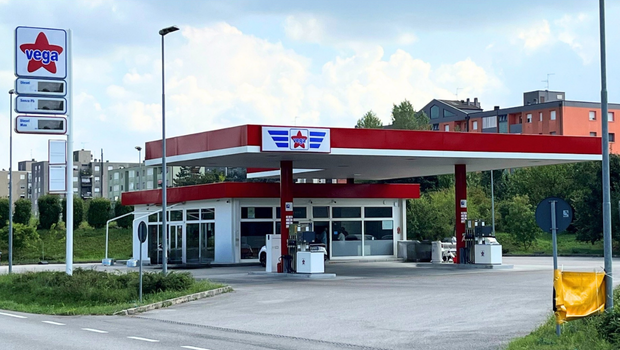

When EG Group agreed to sell its Italian business for €425 million, the move marked not just a withdrawal by one of the world’s biggest independent forecourt operators, but also a rare moment of consolidation led by Italian hands. The buyers — PAD Multienergy, Vega Carburanti, Toil, Dilella Invest, and GIAP — represent a patchwork of family-owned operators with deep roots across the country. For them, the deal is as much about reclaiming control of the local market as it is about building its future.
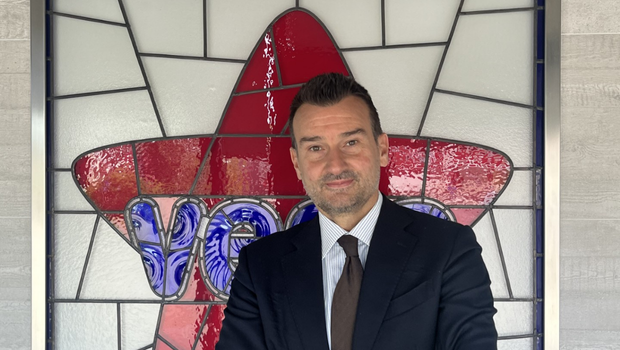
“We saw this as a strategic opportunity,” says Luca Rossi, General Manager of EVA, parent company of Vega Carburanti. “EG Italia had more than 1,000 sites and sold over 1.3 billion litres annually. Around 60% of that network is in the north, where we already operate. It’s a natural fit.” Rossi recalls that discussions began in late 2024, shortly after EG Group signalled plans to streamline its global operations and sell businesses outside its core markets. The resulting negotiations were swift, culminating in an agreement now awaiting regulatory approval.
For Vega and its partners, cooperation was key. “We needed a structure that combined financial strength, regional expertise, and operational scale,” Rossi explains. PAD Multienergy, already known for relaunching the Shell brand in Italy, joined forces with Vega in the north, Toil and Dilella Invest in the southwest, and GIAP in Sicily. “All five companies remain independent,” he notes, “but together we form one of the largest players in Italy by volume — about 3.5 billion litres in total.”

The immediate plan is to preserve the Esso brand, which remains one of the country’s most recognisable despite years of decline. “Our first goal is to give new life to Esso,” Rossi says. “It’s still stronger than many local brands, and we want to modernise it while maintaining its identity.” The network will continue to be supplied by Italiana Petroli under a long-term agreement, ensuring continuity as the consortium gradually integrates operations, loyalty schemes, and fuel card systems.
Beyond branding, Rossi sees the acquisition as a step toward modernising the Italian forecourt model. The country’s 20,000-plus stations are facing consolidation pressure as margins tighten and mobility habits shift. “The market is naturally evolving toward fewer but better-equipped stations,” he says. “Small urban sites will close, while larger hubs that offer services, mobility products, maybe even hydrogen, will grow.” He foresees a revival of motorway stations too, as new concession contracts open the way for more flexible, service-driven formats. “In three to five years, you’ll see stations more like those in the UK or US — close to highways, with food, rest areas, and charging.”
That shift also reflects changing consumer habits. While “non-oil” retail has struggled in Italy, Rossi believes service-led concepts — from parcel lockers to car-care zones — can succeed. “The future isn’t about selling snacks, it’s about meeting mobility needs,” he says. Vega, which already operates its own fuel storage and digital payment platform, hopes to bring its efficiency and innovation ethos to the new network. “We’re not Eni or Q8. We don’t have refineries or upstream production. But we’re flexible, fast, and close to the market. If we combine that with scale, we can do great things,” adds Rossi.
As the acquisition moves through Italy’s antitrust and “golden power” review, Rossi’s team is focused on integration rather than celebration. “When I joined Vega in 2017, we had 40 stations. Now, including EG’s network, we’re above a thousand. It’s a big step but in this business, if you want to play a role, you have to grow.”
Written by Oscar Smith Diamante

By Oscar Smith Diamante