Gilbarco Veeder-Root’s Vision for the Multi-Energy Hub ahead of UNITI expo 2026
Published on: May 5, 2026
Advertorial
Back in the day, convenience retailers managed a relatively straightforward flow of fuel transactions, with the occasional Coke or smoke added to their customers’ carts. Nowadays, operators oversee a growing patchwork of energy types, payment systems, loyalty platforms and customer touchpoints. Food-venience is trending. Electric vehicle chargers are becoming more commonplace. And the software systems meant to manage it all don’t talk to each other.
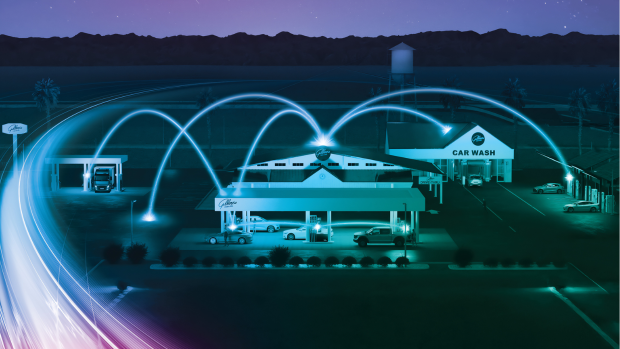
At UNITI expo 2026 in Stuttgart, Gilbarco Veeder-Root (GVR) powered by Vontier will set out its vision for how technology can create a fully connected forecourt.
1. The Integration Debt Problem
Across fuel retail, a quiet crisis is accumulating. Operators who have added new payment technologies, self-check outs, alternative fuel or EV charging options find themselves managing a collection of disconnected systems rather than a coherent operation. We call this ‘integration debt.’ It can lead to higher operational costs, inconsistent customer experiences and a growing gap between what retailers want to deliver and what their technology allows. Connectivity is key. By bringing together forecourt management under a single operational framework, retailers can eliminate friction for staff and customers alike, while unlocking the data insights that make smarter decisions possible.
GVR’s scalable portfolio is designed precisely for this. Our cloud-based platforms allow operators to connect hundreds of current and future devices across forecourts and c-stores.
2. Creating Better Communities
Convenience stores are an important part of the community, becoming the “Third Place” for drivers as the stop between work and home. As these stores increasingly support the pace and routines of daily life, the ability to operate efficiently also contributes to the overall well-being of the communities they serve.
At UNITI expo, the updated SK700 dispenser will be demoed with the first-to-market SpeedIQ motor. This recently launched motor will lower electricity costs by up to 50% per dispenser, thus saving up to 100kg of CO2 per dispenser per year. In addition to these carbon-cutting innovations, the SpeedIQ motor significantly reduces dispenser noise levels.
These innovations strengthen operations efficiency, while also supporting a cleaner, quieter and more community-friendly fuelling environment.
3. The Rising Economics of EV
The transition to electric mobility represents an enticing long-term opportunity for convenience retail. However, it’s more than installing hardware. Grid constraints, charger uptime expectations, energy cost volatility and the demands of a public with zero tolerance for a failed charge session all require a level of operational sophistication that simple plug-and-play infrastructure cannot provide.
Software is the strategic differentiator. Vontier’s offers dynamic load balancing that enables operators to charge significantly more EVs from existing electrical infrastructure without costly grid upgrades. Smart energy management protects margins by navigating grid constraints in real time and by treating the EV charger not as a standalone asset but as an integrated part of the wider retail hub, operators can begin to monetize something that traditional fuel retail never offered: time.
EV drivers spend 15 to 30 minutes on site per visit. That dwell time, managed intelligently, is a revenue opportunity—for food, for services, for loyalty engagement—that fundamentally changes the economics of the forecourt.
4. The Shift from Reactive to Predictive
One of the most consequential shifts in forecourt operations over the next decade will not be visible to customers at all. It will happen in the back end, as operators move from managing their assets reactively – responding to failures after they occur – to managing them proactively.
Reactive maintenance is not only expensive; it also carries hidden costs in network reputation, driver's trust and regulatory exposure. Stores that cannot guarantee reliability will not build the loyalty that justifies the investment.
Predictive analytics and self-healing capabilities are changing this equation. Real-time monitoring, automated diagnostics and remote remediation are enabling a new class of operations. Dispensers, gauges and controllers can be equipped with the technology to identify, diagnose and in many cases resolve issues without requiring human touch.
Underlying all of these themes is a consistent message: the role of technology in fuel and convenience retail is no longer peripheral. It is central.
GVR’s solutions paired with Vontier’s portfolio, bringing together an integrated platform that spans the full customer journey, from the moment a driver pulls into station to the moment they leave, and across every energy type, transaction format and engagement channel.