Interview with Elena Cano (Repsol): “Our goal is to reach 10 million Waylet users”
Published on: Sep 23, 2024
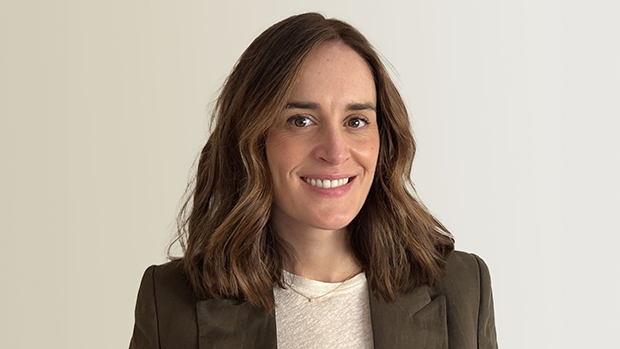
Elena Cano, CEO of Klikin – Waylet, talks to MobilityPlaza about the incredible growth of Repsol’s payment and loyalty app. She shares insights into Waylet’s milestones, the challenges of expanding user engagement, and the app’s role in Repsol’s digital and mobility strategy.

Question. Waylet was launched in May 2017 as both a payment app and a loyalty platform. How did the project begin?
Answer. At the time, Repsol had two niche apps with a combined user base of only 40,000. Copiloto provided price and station information, while PagoClick enabled payment at the pump. It was then that we launched a major initiative to transform the service station business, leading to the creation of Waylet. The primary goals were to enhance customer loyalty and digitize the customer experience.
Early in the project, we saw an opportunity to tackle this challenge in a different way through Klikin, a startup with a loyalty platform for restaurants. The aim was to leverage potential synergies between a small company and a large corporation like Repsol, to deliver a robust, scalable product in optimal time. By 2019, we had reached 900,000 users.
Q. Today, you have over 8 million users. Could you talk about the rapid growth and highlight some key milestones?
A. In 2019, we closed a deal with El Corte Inglés and began using Waylet as a testing ground for digital business models. In 2020, the pandemic significantly boosted digital payments, giving Repsol a competitive edge through Waylet. Several new projects were launched to address emerging customer needs, such as Repsol's online store and carbon footprint compensation. By the end of 2020, we had 1.3 million users.
A year later, in alignment with Repsol's commitment to the energy transition, we focused on developing features for our electric mobility users. We also introduced services like parking payments.
2022 was an especially dynamic year. In a challenging economic environment, we offered competitive discounts compared to other companies, and for several weeks, Waylet was the most downloaded app in Spain, even surpassing TikTok and WhatsApp. We closed the year with 5 million users.
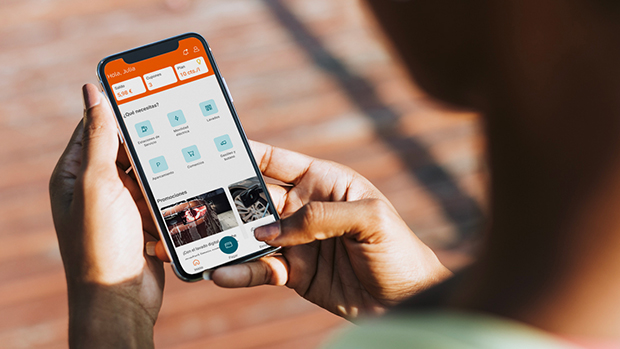
Today, we have surpassed 8 million users and manage 250,000 transactions daily. Our goal is to continue digitizing the customer experience and building a robust value proposition to encourage even more users to adopt Waylet.


Q. Did you ever anticipate such rapid growth?
A. In the early days, we considered reaching one million users a great success. But sometimes reality is better than dreams. The Royal Decree-Law (imposed by the Spanish Government to tackle high energy prices in 2022) enabled us to accelerate customer digitization by offering significant discounts in a context with high prices and regulatory challenges. Many of these users have stayed with us, discovering that Waylet offers an ecosystem far beyond just payment.
Q. Repsol has the largest network of service stations in Spain but in many areas you can no longer grow due to competition issues. In terms of users, are you close to your ceiling or can you grow more?
A. This February, Repsol updated its 2024-2027 Strategic Plan, with the goal of reaching 10 million digital users by 2027. While we sometimes feel we’re nearing the ceiling, it continues to rise. If we maintain our current trajectory, we believe we can achieve that target. Our challenge is not only to grow but to increase the frequency of usage among current users, encouraging them to explore more features within the app. Many users tend to stick with their primary use case and don’t explore further, so we are focused on enhancing the customer experience and providing more value to increase their satisfaction and engagement with Waylet.
Q. How do you determine which services to add and tools to integrate into the app?
A. Listening to our users is essential. Understanding their needs allows us to find the best solutions. Active listening is part of our DNA. While there is also a profitability factor tied to Repsol's core businesses, the main criterion is what the user wants. Our goal is to retain users, increase their frequency of use, and continue growing.
Q. Which services, beyond fuel payments, have been the most successful on Waylet, and which have the most growth potential?
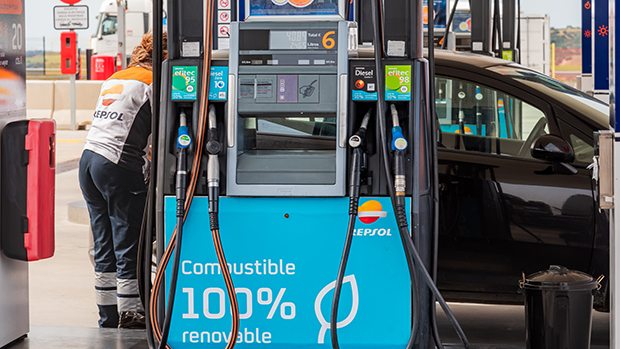
A. Repsol can meet any energy or mobility need consumers have, offering a customer-centric range of options. Across our more than 3,300 stations, we offer efficient fuels, electric charging, alternative fuels, and car wash.
We are working to enhance the user experience by adding features. For example, e-mobility Waylet users can book a charging point, use the route planner, or pay at other operators like Atlante, Ionity, and EDP. We are also expanding our partner ecosystem to enhance our loyalty program. For example, now you can pay for tickets for shows on Seetickets.
Q. How has loyalty evolved in the mobility and fuel station sectors?
A. Digitalization, changing consumer expectations, and sustainability trends have completely transformed loyalty programs. Loyalty is now much more personalized and active. Digital loyalty programs allow us to tailor offers and enhance the customer experience. They also offer flexibility and integration, enabling us to develop cross-strategies with partners that deliver greater value to our customers and foster loyalty.
Q. Waylet’s growth has been remarkable. What competitive advantages does it provide Repsol?
A. First, it helps us build customer loyalty. The loyalty program is integrated with the app, leading to more frequent usage and higher sales. Waylet also provides insights into our customers, allowing us to fine-tune their experience and align with market demands. The app serves as a fast and secure payment platform, expanding opportunities for both the app and the loyalty program, thus increasing the perceived value for customers. In short, Waylet gives Repsol a competitive edge by improving loyalty, optimizing the user experience, streamlining payments, personalizing offers, and fostering commercial partnerships. It also positions Repsol as a leader in electric and digital mobility.
Q. What is your view on the future of big mobility apps like Jelbi in Berlin? Do you see Waylet entering micro-mobility?
A. The trend is definitely towards simplicity and integration – having everything in one place. But being a mobility service aggregator is challenging. Our strategy is to keep things simple despite being a complex business. We’re keeping an eye on market developments, and if we can expand mobility services in a way that adds distinct value, we will pursue it.
Q. You've introduced two subscription models in the Waylet platform, including Klin's car wash program for €7.95 per month. What has the experience been like?
A. It’s been very well received. Subscriptions have enormous potential as consumer habits shift toward the service model. Subscriptions help us build loyalty, increase usage frequency, and enhance the app experience. Right now, we’ve started with car wash and electric mobility subscriptions, but we’re already planning to expand into other products and subscription models.
Q. Spain isn’t traditionally seen as a particularly tech-savvy society. Have you been surprised by the speed at which people have adopted digital payments?
A. Several factors have contributed to the rapid adoption of digital payments in Spain. The pandemic greatly accelerated the shift, helping people overcome hesitations around digital payments. Regulatory changes have also reinforced the security of these transactions.
The banking sector's push towards digital services has practically forced society to engage digitally with money. Bizum, an instant payment service, has grown tremendously in recent years, offering a clear example of progress in digital payments.
In our case, Waylet’s growth and adoption have mirrored these broader market trends.
Written by Oscar Smith Diamante

By Oscar Smith Diamante