Latin America accelerates transition as renewables lead and EV adoption surges
Published on: Jan 14, 2026
OLACDE report shows strong renewable growth, gas consolidation, and record e-mobility expansion in 2025.

Latin America and the Caribbean are advancing steadily toward a cleaner energy matrix, according to a new report published by the Latin American and Caribbean Energy Organization (OLACDE). The analysis highlights three defining trends: renewables continue to dominate new capacity, natural gas consolidates as the main backup source, and e-mobility posts unprecedented growth.
In 2025, 68% of new installed capacity was renewable, with wind and solar accounting for 61%. Electricity generation from these sources grew 19% year-on-year, while overall renewable capacity rose 7%. Today, 67% of the region’s electricity comes from clean sources.
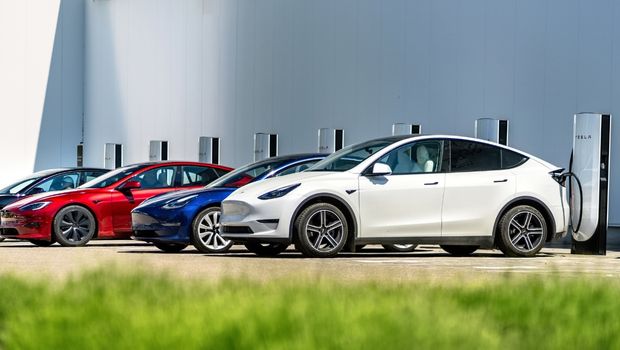
E-mobility is gaining traction at a greater pace. Sales of electrified light vehicles in the region grew 52% in 2025, and the fleet expanded nearly tenfold between 2022 and 2025, an 851% increase. Battery storage capacity reached 1.7 GW, supporting grid flexibility.
Natural gas strengthened its role as a firm energy source, with generation capacity up 12%, while coal and oil-based generation fell 21% and 31%, respectively. Looking ahead, OLACDE projects that by 2050, renewable generation will represent 83% of installed capacity, electricity demand will triple, and wind and solar will supply 37% of total generation. The scenario also anticipates significant investment of around $1.5 trillion, 90% in renewables and growing electricity use in transport and green hydrogen production.
The report positions Latin America as a key player in global decarbonization, while underscoring challenges in financing, infrastructure, and technology to meet ambitious targets.
MobilityPlaza's take
E-mobility is advancing, but public charging sets the pace. Data from the same source reveals a gap between the number of electric vehicles and charging stations. For example, Brazil leads with 372,435 light EVs and 14,827 public stations; Mexico follows with 121,309 EVs and 3,212 locations, while Colombia has 38,596 EVs but only 300 stations. This imbalance between fleet and infrastructure highlights a regional cat-and-mouse dynamic: charging deployment waits for vehicles, while vehicles wait for infrastructure to ease range anxiety.