Q&A with Francis David (Copec): “We have the largest fast-charging network in Latin America”
Published on: Jun 11, 2025
We speak with Francis David, Commercial Manager at Copec Voltex, about how the company is accelerating Chile’s e-mobility transition. From building Latin America’s largest fast-charging network to enabling more sustainable public transport, he outlines the strategic steps behind Copec’s vision for the future of mobility.
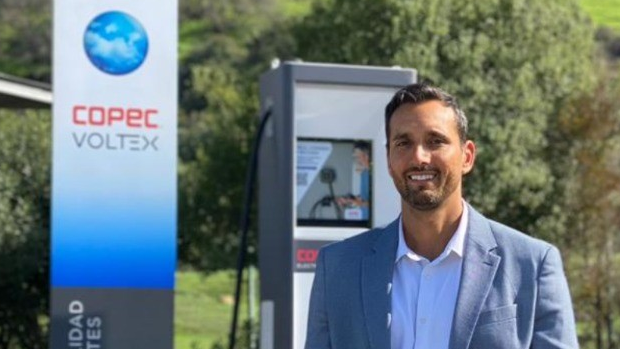
MobilityPlaza. Chile stands out as one of the countries most committed to e-mobility across Latin America. What has been Copec’s contribution to this transition?
Francis David. At Copec, we have embraced the goal and purpose of contributing to Chile’s ongoing energy transformation. For us, e-mobility is not just an emerging technology, it is one of the fundamental pillars of the transition to new energy sources. That’s why we’ve focused on developing infrastructure, services, and platforms aligned with a vision for a cleaner, more decentralized, and better-connected country.
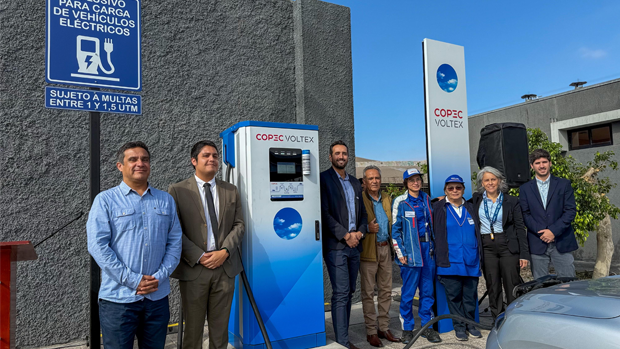
We were pioneers in enabling charging points for electric vehicles (EVs) back in 2012, and following that milestone, we have built the most extensive fast-charging network in Chile and Latin America, spanning more than 2,200 kilometers from Copiapó to Castro. We even inaugurated the world’s southernmost charging point, located in Punta Arenas.
In 2025, we will reach a new milestone by launching the northernmost charging point in Arica, thus completing national coverage with chargers in all 16 regions of the country. This achievement reflects our conviction that the energy transition must be inclusive and reach every corner of the country, so that e-mobility becomes a concrete reality for thousands of users, integrating cars, buses, electric motorcycles, and industrial fleets.
MP. How many charging stations does Copec Voltex currently operate in Chile? How does this infrastructure relate to the diversification of the country’s energy matrix?
- Copec Voltex currently operates more than 140 public fast-charging stations, distributed across Copec service stations throughout the country, and complemented by residential and industrial infrastructure. Most chargers offer 50 kW of power, designed for urban use or short stops, and 120 kW chargers, which can replenish 80% of a battery in 30 minutes.
This public infrastructure is complemented by more than 450 industrial charging points. This deployment not only addresses the need for range but also actively promotes the decarbonization of transport by enabling the shift toward clean sources. In several industrial projects, such as the electric truck charging hub in San Bernardo, all energy comes from 100% renewable sources. As such, the network not only enables e-mobility but also helps redistribute demand toward clean sources, in line with the country’s goals for diversification and decarbonization. It allows us to move people, goods, and energy more efficiently and sustainably.



MP. How is the company addressing range anxiety, charging availability and user experience?
- We’re a company committed to driving the country’s transition. We’ve diversified our offering to include sustainable solutions that address the challenges of climate change and anticipate customers’ evolving needs, while continuing to support the movement and development of people, businesses, and the country as a whole.
At Copec Voltex, we firmly believe that the transition to cleaner mobility is only possible through collaboration. That’s why we’ve focused heavily on building partnerships with municipalities, regional governments, and private companies that share our vision for sustainability and energy efficiency.
MP. Public transportation is also a key pillar of your strategy. What is Copec’s approach to this segment?
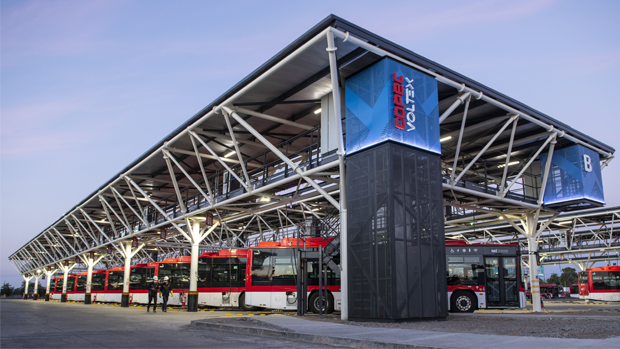
FD. The development of e-terminals by Copec Voltex has been fundamental in driving e-mobility in Chile’s public transport sector. We currently operate 12 e-terminals in the Metropolitan Region and plan to implement 20 new projects in Santiago during 2025, which will serve nearly 55% of the capital’s electric bus fleet. This expansion consolidates our role as a key player in the transformation of the transportation system toward one that is cleaner, more efficient, and sustainable.
This network is further strengthened by two active facilities in Antofagasta and Valparaíso, as well as a new electro-terminal set to open in June in the Biobío Region. This new site will feature eight high-power chargers (150 kW), 100% renewable energy, and the country’s first retractable overhead charging system, raising safety and efficiency standards for the daily supply of 16 electric buses operating in Greater Concepción.
MP. You also entered the battery swapping space through a partnership with Gogoro. How does this initiative fit into your broader offering?
FD. We currently have 17 operational battery swap stations in Santiago, all located at Copec service stations. These allow users to exchange a depleted battery for a fully charged one in just 30 seconds. This solution has been especially well-received by individuals who use motorcycles for daily transportation, as well as by logistics and delivery companies where uptime is critical and waiting for a conventional recharge would mean lost productivity.
We are committed to accelerating the shift toward more sustainable mobility by developing solutions that address both environmental challenges and the everyday needs of individuals and businesses. In that sense, battery swapping for electric motorcycles is one of our innovations aimed at promoting e-mobility and responding to the evolving expectations of our customers.
MP. What opportunities do you see in Chile’s charging market for the evolution of your e-mobility offering in the coming years?
FD. We see a high-potential scenario for the growth of our e-mobility offering in Chile, driven by the rapid adoption of zero- and low-emission vehicles. According to data from ANAC, in just the first four months of 2025, 8,969 light and medium vehicles in these categories were sold, reflecting year-over-year growth of 125.9%. Of those, 1,677 were fully electric vehicles (BEVs). This growth represents a major opportunity—but also a challenge—to consolidate a robust, reliable, and user-centered charging ecosystem.
MP. What role will user experience play in that transformation, both in physical and digital environments?
FD. Our vision goes far beyond installing chargers, it’s about designing a comprehensive experience that supports and enables this transformation. On the physical side, we’ve already deployed 146 public fast chargers across Chile, from Arica to Punta Arenas, achieving unprecedented coverage. At the same time, we are advancing new residential, industrial, and battery-swapping solutions that will allow us to tailor our offerings to each user profile. On the digital front, we are convinced that user experience will be the key differentiator in the charging ecosystem.
Written by Gonzalo Solanot

By Gonzalo Solanot