Q&A with Brian Gray (Accenture): “Driving, as we know it today, will forever be changed”
Published on: Apr 28, 2025
Brian Gray, Global Mobility Retail Lead at Accenture, explores the current challenges and opportunities surrounding AI in mobility. He shares his perspective on how companies can navigate rapid change, the evolving role of data and cybersecurity, and how autonomous driving could play a pivotal role in advancing AI globally.
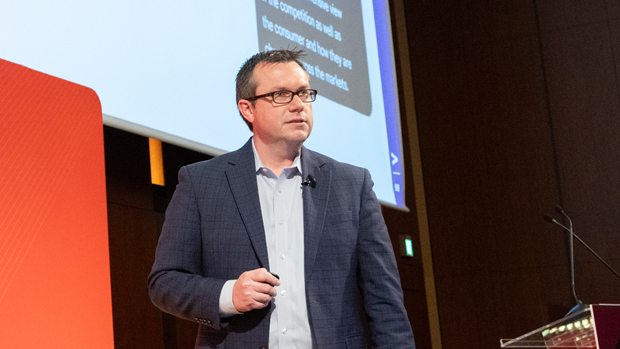
MobilityPlaza. Looking back at your career, how did your connection to AI begin and how has it evolved over time?
Brian Gray. My journey with AI began by exploring its potential in areas like dynamic pricing in fuel, hyper-personalization for consumers and automating store labor. Those early experiences really opened my eyes to how AI could transform traditional processes and drive innovation in meaningful ways. In the last couple of years, with the rise of generative AI and agentic AI, we’ve truly doubled down on its transformative power to reshape how we work and live.
Mobility retailers have started to embrace this shift—developing strategies, experimenting with new approaches, and gaining a competitive edge as a result. Over the years, I’ve had the privilege of working with more than 20 fuels and convenience retailers around the world. It’s incredible to see how different players are seeing AI as a “catalyst for enterprise reinvention” as opposed to just “an evolving part of the tech stack.”
MP. What are the most transformative AI-driven trends in mobility right now? In contrast, what are some common misconceptions people have about AI in mobility?
BG. In fuels and convenience retail stations around the world, AI is being used in so many ways – including dynamic pricing of fuel, predictive maintenance of pumps and optimization of inventory management. Convenience retailers are leveraging AI everyday across many applications including personalized promotions, marketing content generation and self-checkout systems.
There are several misconceptions about AI in the fuels and convenience retail industry. One is the belief that AI will replace human workers entirely. In reality, AI is designed to complement human roles by automating manual tasks and providing valuable insights, shifting employees’ focus to customer engagement. A human worker using AI will be far more effective than a human without AI. Younger generations of workers now expect to be able to leverage AI in their daily lives, and, if organizations are not providing the right tools, workers will start to become disengaged and may find solutions on their own.
Workers in convenience stores may also get frustrated with repetitive, manual tasks which may lead to increased attrition. This is a way to start to think differently about leveraging technology to drive a better experience not only for the customer, but for the employee as well.
Another misconception is that companies lack the right data and it’s super difficult to get started with AI. Most businesses already have sufficient data—including transaction data, store data, and back-office inventory —and can get started implementing AI solutions effectively.

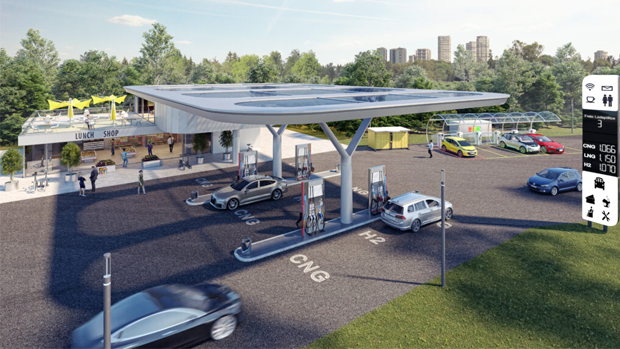
MP. AI thrives on data and we often hear “the more data, the better.” But how do you ensure it's the right data? What distinguishes valuable data from just big data?
BG. Valuable data is distinguished by its relevance, accuracy, and actionable insights. For fuels and convenience retailers, this means focusing on data that impacts the customer experience and drives a more efficient operation. To ensure the data is valuable, it must be accurate. This requires cleaning and validating data to eliminate errors and inconsistencies. Without high quality data, it will be impossible to trust the output. We always say “Garbage In, Garbage Out” – and with AI, using inaccurate data is a recipe for disaster.
It must also be relevant. Prioritizing data will align it with your goals and the specific problems you're trying to solve. Lastly, it must be actionable, so fuels and convenience retailers must focus on data that can drive decisions and improvements. For instance, tracking customer loyalty program usage can inform personalized promotions.
MP. Circling back to AI implementation, how would you describe the key stages that companies typically go through when integrating AI into their operations?
BG. First, one of the most important steps is figuring out the specific problem you are trying to solve. Without understanding the problem, you could spend countless wasted hours. Next, retailers should identify high-value use cases and prioritize them, ensuring they look across entire operational processes rather than focusing on just pieces and parts of the process.
Once the use cases are defined and prioritized, companies can launch pilot programs to test their effectiveness in real-world scenarios. Finally, it’s crucial to monitor and measure the results of these pilots. What value was achieved using AI? What was the true investment? What did we learn from our pilots?
MP. Cybersecurity is often part of the AI conversation, both for companies and users. What are some of the most pressing concerns when it comes to mobility?
BG. Just as AI is transforming businesses around the world, it is also being used by hackers now more than ever before to gain access to systems and cause significant disruptions and loss of value. One of the biggest concerns with cybersecurity and AI centers on the fact that we will start relying on AI to make decisions on our behalf using the available data. If hackers were to inject malicious code into the Large Language Models (LLMs) or into our datasets, it would be next to impossible to determine if the decisions being made are accurate or not.
Focusing on cybersecurity is not optional - it’s becoming more and more critical each day as AI becomes more powerful and embedded in everything we do.
MP. As someone in a global leadership role at Accenture, what trends or innovations in AI and mobility have stood out to you globally?
BG. In speaking with fuels and convenience retailers around the globe – there are several themes that I am seeing regardless of geography. When it comes to marketing and customer engagement, personalization is the buzz word in every conversation – and every retailer is either talking about it or trying to solve for it. Historically this has been an area that has consumed a lot of time, and, if you can build more targeted, 1:1 messaging – and can do it at scale, then it is a win-win.
Retailers all around the world are also experimenting with self-checkout solutions, leveraging AI. From the experience where a consumer simply grabs what they want and walks out to the consumer placing their items under a camera and it automatically rings them up, retailers are testing these solutions to improve the experience, reduce wait times, and in some cases reduce labor hours.
Dynamic Pricing is another key application of AI that’s gathering steam. Retailers have been leveraging AI in their pricing decisions for years – and more and more retailers now are just starting to catch up. Lastly, there are so many use cases now where retailers are taking advantage of their CCTV video feeds on the forecourt and in the store to drive incremental value. Examples include gaining insights into their customers, identifying out-of-stock inventory, and loss prevention.
MP. Have you noticed any region-specific focuses or approaches when it comes to how AI is being applied in the mobility space?
BG. At the moment, I am seeing fuels and convenience retailers around the world discussing the same applications and there are less regional differences than one might expect. All retailers are generally looking at leveraging AI to get closer to their customers and drive a more efficient and streamlined operation. Where we are seeing more differences is between larger and smaller, regional players. The multi-national oil companies have been developing broader AI strategies across all business units, not just retail. However, they are in some cases struggling to prioritize their AI use cases and gain significant traction. Regional players are experimenting with AI and able to move quicker, but are lacking more holistic and thoughtful AI strategies.
While many mobility operators are actively experimenting with AI, there are so many that are approaching it with caution. Many retailers do not want to be the “first penguin in the water” – and are letting others pave the way and work through the challenges before they start to adopt. Retailers that are getting started now are already starting to realize value, and will be leapfrogging their competition in a number of critical areas.
MP. Are there any emerging AI technologies that you believe will have a breakthrough impact on how people move, fuel, or interact with mobility services?
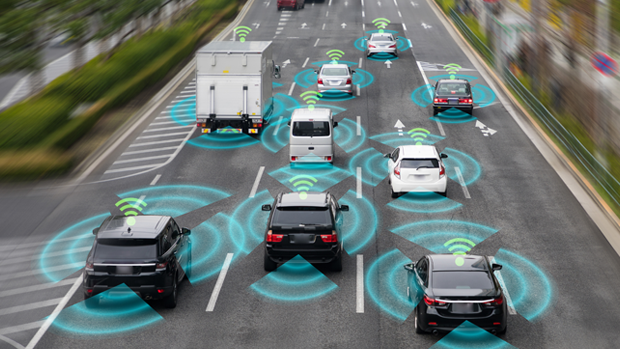
BG. In the last few years, we’ve seen major strides and bold ambitions on robo-taxis. Driving, as we know it today, will forever be changed. How we get around, how we use energy, and how we ultimately are safer because of the technology will all be amazing. As AI continues to expand into mobility, it will drive the transition to a more sustainable industry by optimizing fleet operations, integrating renewable energy sources, enabling mobility-as-a-service models, enhancing traffic flow and supporting the adoption of electric and autonomous vehicles.
Over the last five years, the pace of innovation in this space has really taken off. But the real issue isn’t just the technology — it’s change management and human perception. It’s about getting people to trust that an autonomous system can take over. The funny thing is, most cars today already have some level of AI-driven functionality—lane assist, adaptive cruise, auto braking and so on. I think we are just scratching the surface when it comes to advancements in mobility leveraging AI. In the next few years, we will likely see breakthroughs in battery technology, EV charging technology, renewable fuels, and smarter infrastructure (think 5G in mobility). So buckle up, it’s going to be an amazing ride over the next five to 10 years.
Written by Gonzalo Solanot

By Gonzalo Solanot