Sinopec sees global oil demand peaking by 2030
Published on: Dec 31, 2024
The company has unveiled its first global energy outlook as well as its 2025 China Energy & Chemical Industry Development Report.
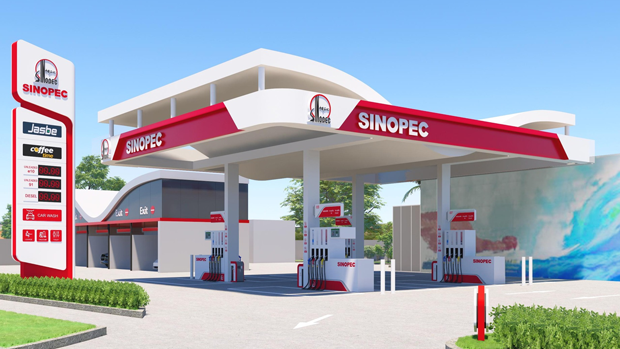

China Petroleum & Chemical Corporation (Sinopec) has released its inaugural long-term global energy outlook, marking a significant milestone in its commitment to understanding and shaping the energy transition.
The company’s report outlines pivotal trends shaping the future of energy, focusing on both fossil fuels and renewable energy. Total primary energy consumption is projected to peak at 26.71 billion tonnes of coal equivalent by 2045 and by 2060, renewable energy will dominate the energy mix, accounting for 51.8% of total consumption.
However, global energy consumption is expected to slow, stabilizing at 25.25 billion tonnes of coal equivalent by 2060. Oil and gas will still play a significant role, comprising 35.7% of energy consumption by this time.
Oil demand is anticipated to reach its peak—4.66 billion tonnes—around 2030. While industrial feedstocks gain prominence, oil will remain critical for transportation, making up 40% of the sector’s energy consumption by 2060.
Non-fossil energy technologies, including hydrogen, Carbon Capture, Utilization, and Storage (CCUS), and advanced energy storage, are set to experience significant growth. Hydrogen, in particular, is poised to transform the energy sector, with consumption surpassing 340 million tonnes and its share increasing from 2% in 2023 to nearly 50% by 2060.
Alongside this, Sinopec published the 2025 China Energy & Chemical Industry Development Report, offering critical insights into the evolving energy landscape in China and globally.
This report shows China’s primary energy consumption will plateau post-2030, peaking at 6.8–7.1 billion tonnes of coal equivalent. Oil consumption will reach its zenith before 2027, at approximately 800 million tonnes.
By 2035, non-fossil energy in China will account for a majority of power generation, with output expected to exceed 8,400 TWh. From 2026 to 2030, the share of non-fossil energy in total consumption will rise to 27%, supported by a diversified mix of electricity, hydrogen, ammonia, and other clean alternatives.