Solving the problem with EV payments
Published on: Jun 4, 2025
Advertorial
In their latest whitepaper “Challenges of Integrating Payment Terminals into EV Chargers”—WILLBERT by EUROLOOP offers an in-depth analysis of the operational, financial, and customer-experience implications of payment terminal integration in public EV charging.
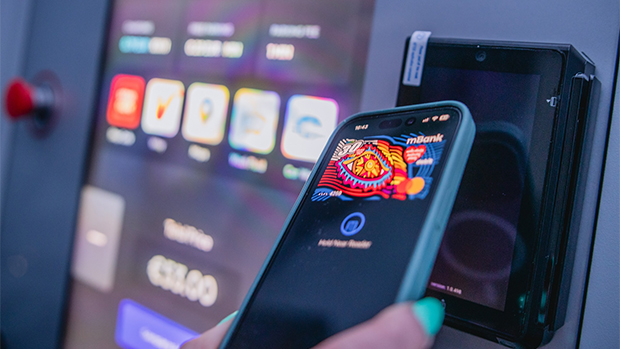
With changing customer expectations and the introduction of regulations such as European Union’s Alternative Fuels Infrastructure Regulations (AFIR), forecourt retailers and motorway service operators are increasingly required to equip EV charging stations with payment terminals for ad-hoc credit and debit card payments – but this integration is far from simple.
Traditional EV charging payment set-ups tend to be fragmented. The payment process involves multiple independent components: an eMSP platform (for user accounts or apps), a CPMS (cloud software managing charger operations), the charger’s on-screen UI and an attached payment terminal (card reader) with its own backend. This fragmentation creates challenges from both a technical aspect and with the user experience. In contrast, vertically integrated solutions, such as WILLBERT’s PayBERT, promise a seamless approach to payments, combining charger and payment systems into one cohesive platform.
In this type of fragmented system each of the components often originates from a different vendor. For example, a forecourt operator might use a third-party CPMS to run chargers, integrate an external card reader device for payments and allow various eMSP cards or apps – all loosely coordinated. There is currently no standard way of implementing such payment terminal integrations.
This lack of standardisation means each installation can be viewed as a bespoke project, leading to extra costs and administrative work for the CPO. Different payment terminal models and software versions add further complexity to this already fragmented landscape.
What are the key challenges
Pre-authorisation holds and driver confusion
When using a credit/debit card at an EV charger, the system typically performs a pre-authorisation – a temporary hold of funds to ensure the customer can pay for the session. Once charging is complete the actual amount owed is debited and any remaining funds released back to the customer’s account. This can cause confusion with drivers who worry that they have been incorrectly charged for the session and in some instances, where a charging session has failed to initiate, been charged multiple hold fees. This issue is further exacerbated by the slow refund process (this can take up to 7 days with some banks) and a lack of information from the charger to the customer.
Lack of session awareness on terminals and UI gaps
In this type of fragmented system there is often a lack of awareness between the EV charger and the payment terminal, which can lead to a disjointed user experience. If the card reader and the charger’s display screen are not fully synchronised this can leave EV drivers unclear about the correlation between the price and charging process.
The driver interacts with a card reader (often a small screen or just LED indicators) for payment, and this operates independently from the charger’s display. If the two are not fully synchronised then there may be little correlation between the payment terminal and the charging status. Users are unable to check cost in real time and if an error occurs such as the charger not working, or the cable not being connected properly, the payment terminal may not clearly convey that message, potentially leading to multiple payment attempts.
Difficulty Providing Receipts and Invoice
Another pain point in non-integrated systems is issuing receipts or invoices for charging sessions. Drivers (especially commercial fleet users) often need an official record of the transaction – including the energy consumed, cost, date/time and taxes – much like a traditional fuel station receipt.
Many sites do not have the ability to print receipts and therefore rely on a manual retrieval process via a web portal. This is a cumbersome process for the end user. For business users there is also the additional complexity of including both charging session information from the charger and cost information from the payment terminal. This is often a requirement for business expense reimbursement but if the payment terminal and charger are not properly integrated, providing a receipt with all this information can be challenging.
Hardware and compatibility limitations
Integrating a payment terminal into an EV charger is not just a software challenge – it has hardware and mechanical constraints as well. Forecourt operators often encounter difficulties when retrofitting payment hardware onto existing chargers or aligning new chargers with preferred payment systems.
Not all card reader hardware is compatible with every charger model. The terminal must physically fit onto the charger body (or pedestal), meet environmental ratings and interface electrically with the charger’s controller. If a retailer has a preferred payment terminal vendor (for example, to match their in-store systems or banking provider), that device may not work with the charger without custom development. This limits choice and can force operators into a specific hardware ecosystem. Many off-the-shelf payment keypads are also designed for indoor retail, not for enduring rain or sub-freezing temperatures.
Beyond hardware, there’s also the issue of the payment backend. Many CPOs have a relationship with a Payment Service Provider (PSP) or acquiring bank that processes transactions on their behalf. The chosen payment terminal must be supported by that PSP’s system. This adds another layer of verification and can limit the retailer’s selection. The reader must also comply with Payment Card Industry (PCI) security standards and often needs certifications (EMV, contactless protocols, etc.)
Operational and Maintenance Inefficiencies
Fragmentation doesn’t only affect the user experience and installation – it also impacts day-to-day operations for the charge point operator. Fragmented systems can result in duplication of work (managing two systems at once), inaccurate financial reporting, issues with maintenance and uptime monitoring due to blind spots in the process, lack of transparency and ownership from vendors and large operating costs.
How is the industry tackling these issues?
The EV charging industry has been actively seeking solutions to make payment integration more seamless. Several mainstream approaches have emerged, bridging the gap between fully fragmented and fully integrated.
Platform-Level Integration (CPMS-centric):
Many CPOs leverage their backend software (CPMS) to mediate between chargers and payment terminals. Instead of the terminal talking only to the charger hardware, it communicates with the CPMS, which in turn controls the charger. This is essentially a “cloud-to-cloud” integration. The CPMS handles pricing, authorisation logic, and session control centrally. This approach mitigates some fragmentation as pricing is configured once in the CPMS, and the terminal uses that data. The CPMS also knows when a card transaction starts a session and when it ends, enabling it to pair the data.
“Kiosk” or Shared Terminal Models:
To reduce hardware costs and complexity, some providers allow one payment terminal to serve multiple chargers. The CPMS or a “master” charger coordinates this. In practice, this resembles parking garages or petrol forecourts where you might pay at one machine for a specific bay. The success of this model hinges on a well-designed user interface to select the charger and clear communication (usually on the chargers’ screens) directing users where to pay. If executed well, it can significantly cut hardware costs and simplify compliance (one device to certify instead of many). However, it requires a robust backend integration – the central terminal must be aware of each charger’s status and be able to start/stop sessions remotely via the CPMS.
Roaming and Mobile Payments:
Another mainstream approach, particularly in Europe, has been relying on eMSP roaming networks and mobile apps for “ad-hoc” payments, instead of physical card readers. While not a physical integration, it’s worth noting that many CPOs initially avoided hardware by using smartphone web apps or QR-code payments to satisfy open-access requirements. For instance, scanning a QR code on the charger that opens a web payment page (with Apple Pay, Google Pay, or card entry) is one method.
This avoids hardware fragmentation but shifts the burden to software. Drivers need a working phone and internet connection, and the user experience can suffer if apps glitch or cell signal is weak. Nonetheless, it’s a common interim solution globally, including the U.S., to meet requirements for credit card acceptance without installing physical readers on every unit.
Standards and Protocols:
Industry-wide efforts are underway to standardise payment integration. The latest protocols (OCPP 2.0.1 and OCPI 2.2) include features for handling pricing display, direct payment authorisation, and session reporting in a uniform way. The hope is that a standardised integration will enable quicker implementation of payment systems across chargers, reducing the current need for custom middleware for each vendor combo.
Despite these efforts, the mainstream approaches still often fall short and whilst they may mitigate some pain points they may not eliminate them entirely.





Is vertical integration the solution?
Vertically integrated payment solutions embed the payment functionality deeply into the charger’s own hardware and software, rather than bolting it on as an extra. WILLBERT’s PayBERT module, tailored for roadside retailers, is a leading example of this approach. In a PayBERT-enabled charger, WILLBERT provides a fully integrated package: The charger comes with a built-in contactless payment terminal, and the charger’s firmware and backend (HAWKe) handle all payment logic internally. This means no separate hardware or software integration is needed by the operator – PayBERT chargers arrive payment capable out of the box.
The key features and benefits of this integrated approach include:
Unified User Experience: With PayBERT chargers, the payment process is part of the charger’s own touch-screen interface. Drivers are guided through a simple flow on a single screen. Before charging starts, the driver sets a budget for the session on the charger UI. The system then immediately places a hold for that amount via the internal payment module. This approach turns a mystery hold into a user-chosen, transparent step. The driver knows exactly how much will be reserved and can tailor it to their needs – eliminating the shock of an unexpected large hold.
Once the charging session proceeds, the charger keeps track of the energy used and cost in real-time against the fixed budget. If the driver stops early, the system automatically unblocks/refunds the difference immediately when the session ends. The result is far less confusion and a better user experience.
Session Awareness and Transparency: Because the payment is integrated, the charger’s interface can display session status and cost updates tied to that specific payment. The PayBERT system can show the user how much of their pre-authorised budget has been used as charging progresses. The payment module and charger controller share data in real time. This means if a charger stops due to an error, the payment can be voided or paused instantly without the user having to take extra steps.
Automatic Receipts and Invoicing: A major advantage of vertical integration is the ability to seamlessly generate receipts. Since the PayBERT backend (HAWKe) contains both the transaction information and the charging session details, it can automatically settle payments and issue invoices with the energy delivered, price, timestamp, VAT, and payment method to drivers on behalf of the CPO.
The solution provides one integrated workflow: pay -> charge -> get receipt, all handled by the charger’s system. The benefit to operators is equally significant: they don’t need to reconcile two systems to produce invoices – PayBERT does it automatically, ensuring every session is accounted for with the proper documentation.
Single Backend for Pricing and Policy: In an integrated solution like PayBERT, the CPO uses one backend interface (HAWKe) to set prices, session time limits, idle fees, and other policies. PayBERT gives operators the ability to control and regulate energy prices and fees for occupying a parking spot without an active session – all in one place . Any pricing changes (such as a new kWh rate or a grace period for idle fees) are immediately applied to the charger and its payment logic simultaneously. There’s no risk of mismatched configurations.
PayBERT even supports RFID loyalty and fleet cards in addition to bank cards, unifying those payment methods into the same system . This is beneficial for petrol station operators who often have their own fuel card or loyalty programs, allowing them to extend those offers to EV charging customers without bolting on another separate system.
Faster Deployment and Compliance: A vertically integrated product can drastically shorten deployment time. With WILLBERT’s Amber chargers (which include PayBERT as standard) a site can be upgraded to direct payments in weeks. This is because the usual hardware/ software integration steps are already completed.
This plug-and-play style integration also ensures regulatory compliance straight out of the gate.
Improved Reliability & Maintenance: With one integrated system, maintenance is simplified. The charger’s monitoring system also keeps tabs on the health of the payment module. If the card reader malfunctions, it shows up in the same diagnostics as any other charger component, triggering a unified support process. There’s no separate black-box device whose faults might go unseen.
Additionally, vertical integration often means the hardware design is optimised: the card reader is placed ergonomically (meeting accessibility requirements), shielded from weather by the charger housing, and tested for electrical interference alongside the charger. The result is often more robust than a retrofitted solution.
From a support standpoint, there’s one single point of contact – the charger vendor – responsible for the entire station including payments, which can speed up issue resolution and firmware updates. The integrated approach can also enhance security, since the data flow is wholly within one system (there’s less risk of insecure interfaces between charger and a third-party device when one company designs the whole product).
Vertically integrated solutions like PayBERT address nearly all the pain points felt by retailers and end users when using fragmented systems. Integrated systems make the payment process clear and user-friendly (no more mysterious holds – the driver is in control of their budget and immediately sees refunds), they ensure the payment is tightly linked to the charging session (the system knows when to charge and when to release funds, with no ambiguity), they automatically handle invoicing (saving headaches for both drivers and operators) and they simplify the operational workload (one system to manage, far less duplication or reconciliation).
For more information on any of WILLBERT’S solutions, please get in touch.