Q&A with Aleid van der Wiel (Shell): “We see MCS standard as the future for HDV charging”
Published on: Nov 13, 2024
We spoke with Shell’s Head of Public eMobility and Power about the company’s first self-developed dual-megawatt charger for both trucks and shipping vessels in Amsterdam, the impact of e-mobility on the transportation sector, and the challenges ahead in establishing a global Megawatt Charging System.

Question. How did the project to create an interoperable charging solution for both trucks and marine vessels originate?
Answer. We’re currently in an interim state when it comes to the electrification of the marine and commercial road transport sectors. The appetite for electrification is there across both sectors, but uptake at scale remains slow.
While increasing numbers of shipping and logistics companies around the world are starting to electrify, many are still in a ‘waiting game’, held back by concerns around the reliability, accessibility and speed of charging infrastructure across key transport and freight routes.
At Shell, we see tomorrow’s progress as today’s job. So, the launch of our first 1MW dual charger sets out to tackle these challenges head-on and support fleets on their decarbonization journeys.
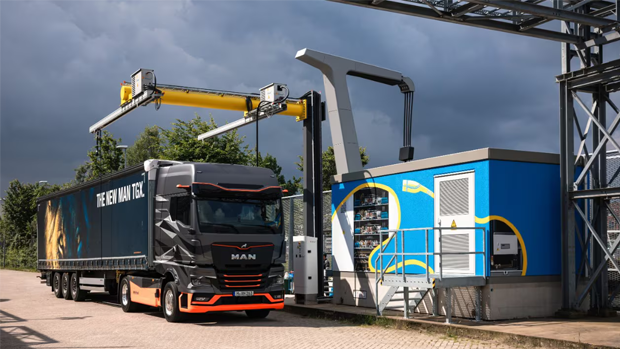
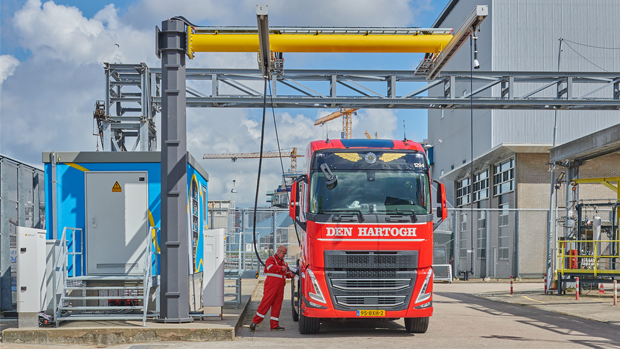
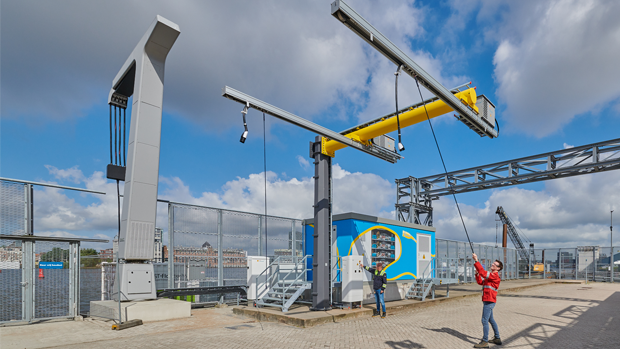
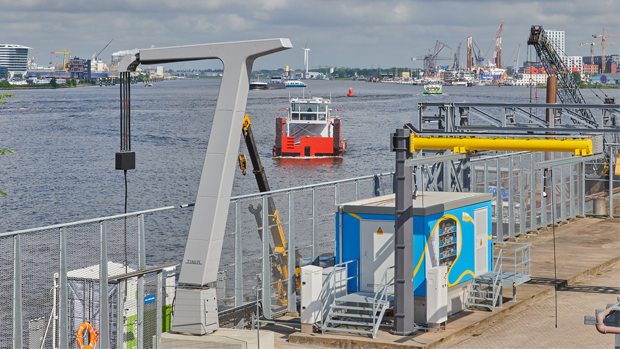
Our 1MW dual charger provides dual-purpose charging for electric marine vessels and heavy-duty CRT vehicles. Offering higher charging speeds than a standard connector, it helps businesses get their vehicles and vessels back to work quicker – helping to improve efficiency in the multimodal mobility sector.
Decarbonization is another concern for operators as they face tightening regulations on emissions. For example, the European Union (EU) has this year introduced stricter standards on heavy-duty vehicles, setting a new target of reducing emissions by 45% by 2030 (up from the previous target of 30%).
Fleet managers and business owners need support with the challenge of balancing sustainability goals with the practical demands of running daily operations, while striving to achieve ever greater efficiencies. Our new dual charging solution aims to ease this balancing act by creating strategic charging infrastructure that supports operational efficiency (through faster, smart charging solutions) while helping fleets to reduce their emissions with electric vehicles (EVs).


Q. What were the technical and logistical challenges you encountered during its development?
A. Our in-house technical design team was instrumental in integrating the Megawatt Charging System (MCS) standard with our existing hardware charging solutions. This required us to critically assess and refine our current designs and knowledge base. A significant advancement was the direct connection of the 1MW charger to a 10kV behind-the-metre microgrid. This upgrade enables an effective transition between marine and road applications within a single device—an achievement that was previously beyond our reach.
We also developed an innovative road overhead system equipped with a top-mounted cooling unit to enhance performance. Notably, our collaboration with Zinus, a Norwegian company, led to the successful design of the first MCS Marine arm, now integrated into the Shell 1MW charging system.
Throughout this process, we received invaluable feedback and support from the Port of Amsterdam and the municipality, which was important in securing the necessary permits and engaging our customers. These relationships help us drive meaningful change in the transition to more sustainable, efficient transportation.
Q. How do you see this charging solution shaping the current e-mobility landscape, particularly in terms of interoperability between different sectors?
A. Our hope is that the launch of our new dual 1MW charger will prove to be a milestone moment in the world’s journey to electrify our global transport system. By making electric transportation more efficient and accessible, it paves the way for simple, standardized, fast charging.
Existing systems are typically geared towards larger vessels and vehicles or provide slower charging speeds, forcing overnight charging. This immediately creates a barrier to mass electrification when so many fleet managers are being tasked with achieving greater efficiencies. According to an internal recent Shell survey of 106 CRT professionals across EMEA, APAC and the Americas, they highlighted that 64% think that a lack of robust and reliable charging infrastructure is a key barrier to decarbonization.
Our dual 1MW charger addresses this by offering rapid charging rates depending on the specifications of the vessels and vehicles using it. Marine vessels with 500kWh to 1MWh batteries can recharge in two to three hours while boats with 1.5MWh - 3MWh batteries can charge in five to six hours. The charger also has the potential to fully recharge trucks in less than two hours, depending on their capacity and configuration. This means that fleets can get back on the road or water at speed, reducing costly downtime.
Fast dual-purpose charging infrastructure at ports can facilitate smoother operations than those built around less rapid or reliable solutions and also has strategic significance. It positions EVs as one of the viable long-term solutions for businesses with multi-modal transport operating across long-haul routes. However, it's important to note that – while we see the MCS standard as the way forward for multi-modal, heavy-duty charging – it is still in development, with the final standard expected to be published within the next year or so.
Q. What challenges do you foresee in establishing a global Megawatt Charging System (MCS) standard, especially in terms of aligning different industries and regions?
A. Aligning different industries and regions can be a challenge, but it’s also a tremendous opportunity. By fostering collaboration among industry leaders, Original Equipment Manufacturers (OEMs), and regulatory bodies, the industry can develop technologies that are fast, reliable, and cost-effective across multiple sectors, setting a strong foundation for global adoption.
While cross-industry collaboration is essential, it can also take time. The process demands thorough testing, validation, and reaching agreements on specifications as well as ensuring stakeholder interests and goals are aligned. Prototype testing is particularly important here; it helps Shell ensure reliability, interconnectivity, and safety. This is especially true for communication protocols, as they act as the interface between chargers and receivers.
Different bodies need to come together to achieve common goals, and that coordination can be challenging. Regulatory support for standardisation can also be a lengthy process, as we've experienced with other standards in the past. However, with the right policies and industry-wide effort in place, we can drive the investments needed to make this standard a reality. I’m confident that as more regions recognise the benefits, we’ll see growing momentum toward widespread implementation.
The aim of showcasing the tangible benefits of the MCS standard could ultimately be to build confidence and drive adoption. That’s why initiatives like our dual 1MW charger at the ETCA are so important. They demonstrate how the MCS standard can support fleets’ efficiency and sustainability goals through fast and reliable charging solutions. By highlighting these successes, we can inspire global adoption and make this standard a cornerstone of the future of transport.
Q. How will this standard impact the future of e-mobility and the transportation sector?
A. As we look to the future, what is exciting about this innovation is its potential to bring much-needed consistency and a bespoke solution to EV charging infrastructure. To date, EV adoption has been hampered by the patchwork of charging standards, especially at ports around the world.
By providing flexible, standardized access our charger offers standard protocols and hardware compatibility. This simplifies EV charging infrastructure, helping to make EV adoption a more realistic and attractive prospect.
The charger’s design can also be customized offering a future in which fleets can build a one-stop eDepot solution based on their unique needs and infrastructure.
By ultilizing the global MCS standard for multiple modes of transport and enabling bespoke charging systems, we can facilitate wider EV adoption and provide a powerful blueprint for an electric future.
Q. How would you describe Shell’s role in the development and global adoption of this standard?
A. At Shell we seek to enable those with the toughest decarbonization challenges like those in energy intensive marine and commercial road transport sectors.
The development of our dual 1MW charger is indicative of this approach. It meets the practical needs of marine and commercial road transport fleets in an innovative way today and in doing so unlocks the confidence, investment and infrastructure needed to develop a global MSC standard in the future. With this innovative solution, we hope to also inspire a wave of new solutions, collaboration and positive policy change so that moving forward we can collectively turbocharge electrification and decarbonisation progress.
Q. Looking forward, what are Shell’s next steps in advancing public e-mobility and power solutions?
A. Our next steps are to continue developing private and public charging solutions at scale to help commercial road transport businesses access the robust and reliable infrastructure they say they need.
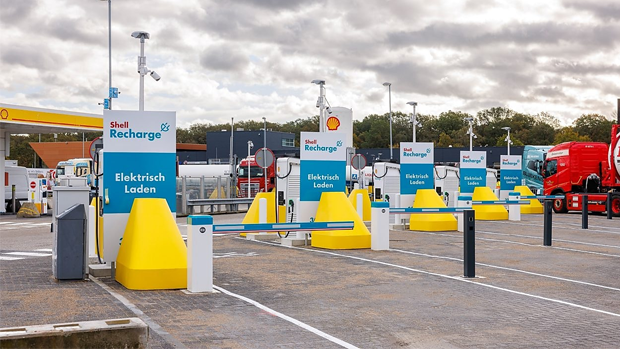
Shell Recharge is our public charging network, serving customers in a growing number of countries across the world, ensuring their business drivers have a seamless charging experience, that is fast, reliable and easy. Currently, we have over 60,000 public EV charge points available of varying power. By 2025, we expect to increase that number to 70,000, and by 2030, we aim to have 200,000 charging points accessible worldwide. For heavy-duty vehicles specifically, there are currently 23 charging stations across the Netherlands, Germany and the UK as part of an expanding network.
Moving forward, we are focusing our investment in public charging as that’s where we have a competitive advantage and where we see the most value moving forward. As both consumers and business customers accelerate towards EV adoption, we expect to see a shift away from at-home charging with material differences across regions.
We are also focusing on the markets that are furthest along in the EV journey, and therefore where we can add the most value for our customers. The majority of our Commercial Road Transport business is currently concentrated in Europe - and will continue to be so.
Written by Gonzalo Solanot

By Gonzalo Solanot