Sergio Padilla (FEMSA): “We want to be the global leader in proximity retail”
Published on: Jul 16, 2025
With over 24,000 stores worldwide, FEMSA’s OXXO chain is redefining proximity retail through innovation, data, and personalization. In this exclusive MobilityPlaza interview, Sergio Padilla Navarro reveals the strategy behind OXXO’s global rise and retail transformation.
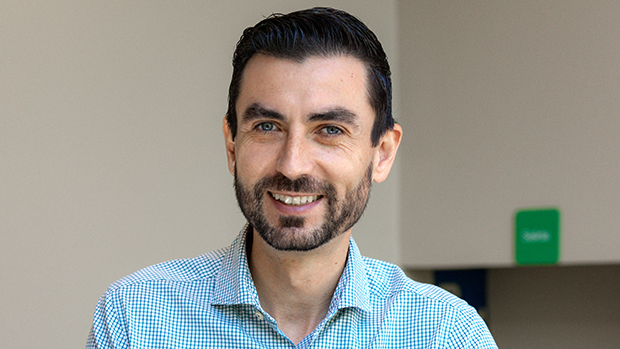

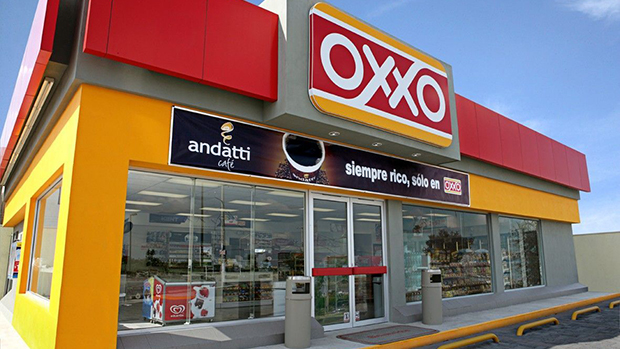
Fomento Económico Mexicano (FEMSA) has consolidated its position as one of the leading global players in the proximity retail sector. Through its flagship OXXO chain, the company has achieved significant expansion and now has more than 24,000 stores in Mexico, Latin America, and recently in the United States. In Europe, FEMSA strengthened its presence with the acquisition of Valora Holding AG, a Swiss company specializing in convenience stores and food services.
In an exclusive interview with MobilityPlaza, Sergio Padilla Navarro, Networks Director of FEMSA Proximity and Health, shared insights about the company's evolution, highlighting the importance of technological innovation, personalization and quickly adapting to market trends.
MobilityPlaza. Can you give us a brief overview of OXXO's growth? Where does this drive for expansion come from?
Sergio Padilla. The perception of how many profitable stores could exist in Mexico has changed radically over time. Even within the company the belief was that the potential was limited. That view has completely transformed.
The expansion strategy is connected to the evolution of the store's value offering. As you add layers of value and solve more consumer needs, you turn that location into a more productive one. With an improved offering, unprofitable locations become profitable.
Both approaches - improving the value proposition and finding profitable locations - are closely related. It has been a continuous learning process for over four decades. Despite the importance of selling beverages and snacks, we wouldn’t have the pace of openings nor the ambition to expand if we didn’t look elsewhere. At the same time, our expansion comes with great responsibility.
MP. In a way, OXXO has created its own market by pushing the boundaries of convenience, like it happened in Japan with konbinis.
SP. Consumers are always dissatisfied; that is something we love about working in retail. Consumers learn new ways to satisfy their needs when they know them. In Japan, they discovered they could solve dry cleaning in convenience stores more efficiently.
The need already existed, but it was solved differently. Proximity presents better alternatives, and when consumers understand them, they adopt them. That happened in Japan and will happen in any market where better solutions are presented.
MP. Data plays a key role in your retail ecosystem. What impact does it have on the day-to-day operations? Managing 24,000 stores can't be easy.
SP. Data fuels our decision-making processes that operate through tools, people and talent. This organization learned to distinguish what is effective from what is not.
I will give you an example: no two of the 24,000 stores have exactly the same variety of products. This responds to a working system that modularizes and fragments decisions according to the store environment, consumer preferences, operational needs and even available square meters.
The consumer may not be aware of it, but in the store near his home, he finds things that are more relevant to his needs than in the store near his work.


MP. How quickly can you react to changing consumer habits or new products?
SP. It is faster to act on price and variety than on store layout, as that requires a physical rearrangement. There are natural cycles and implementation times that respond to the nature of our industry. That said, the evolution of mechanisms to understand data gives us more speed and granularity. We are detecting faster. All data analysis is done securely and responsibly.
Our installed capacity is at different stages in each country. That excites us as it shows the potential we have to keep improving.
MP. Another way to get consumer insights is through loyalty programs. How does this knowledge impact the consumer experience?
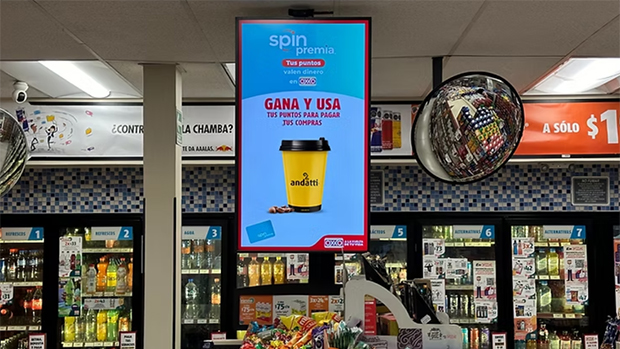
SP. We have a fairly robust loyalty program in Mexico with 25.2 million users, and also in our Health division in Chile. It allows us to learn how the same consumer changes their consumption habits throughout the year, month, week, or even day. Consumers change brands within the same category depending on whether it's the beginning or the end of the month, or their economic situation.
That influences how we design our promotional activity and how we emphasize different needs in the store. It also allows us to understand how our store network shares consumers, and for what occasions or needs they use each store. We can observe who are multi-need consumers and who are single-need consumers. We are seeing positive results in our personalization campaigns.
MP. Hyper-personalization is a big global trend. What other clear trends are you currently seeing?
SP. It's not new to talk about the importance of freshness in the value proposition. Freshness can be very good for sales, but it can also be dangerous for profitability. Data helps us to make freshness more profitable.
Another trend that won't surprise you is the growth of private label. We have to be granular to find the balance between private label and leading brands. There will be stores where consumers want their familiar brands, and private label is a complementary option.
MP. We see a lot of technological innovation in the sector recently: from autonomous stores to retail media. What are the most transformative innovations in OXXO stores?
SP. I will mention three that still have high potential for the industry. First, the Internet of Things and the intelligent use of telemetry. They still have a lot to contribute to help us become more sustainable, reduce costs, optimize in-store labor and improve the consumer offering.
Second, digitizing experiences combined with process robotization. There is still a lot of value to be captured here, both in terms of customer service and operational efficiency. And third, AI in its different degrees of sophistication.
At FEMSA Proximity and Health, we have an operation that I love because it combines all three: Retina Media, FEMSA's retail media powerhouse. We use IoT to support in-store digital media that provides live input to the algorithm, robotic automation to digitize processes, and analytics to personalize the offer.
MP. Are there any current trends that you think are being overestimated?
SP. I think that purist implementations of autonomous solutions are likely to be niche. However, many of the aspects of that technology have great scope for implementation in partially human-operated stores, especially in the context of labor shortages.
The first implementations will be in stores in controlled environments such as universities, residential complexes, airports and industrial areas. History has shown us that conceptual and radical technological developments, when they go mainstream, do so in grayscales. And that's what I think will happen with autonomous stores.
MP. The OXXO brand and FEMSA are more and more international. Could you give us an overview of the company's expansion strategy?
SP. We aspire to be the global leader in proximity retail. This will happen in the context of the “FEMSA Forward” strategy. That strategy led us to focus on the industries we want to be in and to take a global view within those industries.
We are convinced that while retail doesn't travel, the capabilities that allow us to do retail locally and effectively do. Built over four decades, the organization's ability to identify customer needs can be taken around the world. This expansion will happen both organically and through acquisitions, when the asset itself and the price make sense.